
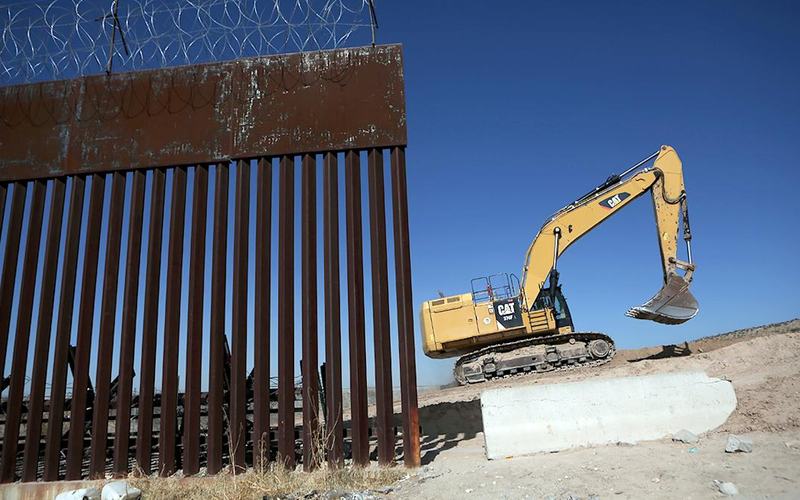
U.S. Border Patrol apprehensions along the Mexican border fell to their lowest annual level since 1968, according to Department of Homeland Security data released Friday, marking a sharp decline under President Donald Trump’s immigration crackdown.
Federal agents recorded 98,708 apprehensions of people crossing between official ports of entry during the fiscal year that ended September 30. That figure is a dramatic drop from more than 2 million apprehensions annually in both 2022 and 2023.
“The results could not be clearer: strong enforcement works,” Homeland Security Secretary Markwayne Mullin said.
The total was the lowest since Border Patrol recorded 96,641 apprehensions in 1968, reflecting a major shift in migration patterns across the Americas.
The decline began during the final months of former President Joe Biden’s administration, after his administration tightened asylum restrictions and Mexico stepped up enforcement. However, the drop accelerated after Trump returned to office in January 2025 and imposed stricter limits on asylum access while expanding immigration arrests and deportations nationwide.
Adam Isacson, a senior associate at the Washington Office on Latin America, attributed much of the decline to the restrictions on asylum applications at the border.
“The overwhelming reason for the drop in migration is the disappearance of the right to apply for asylum at the border,” Isacson said.
The restrictions have discouraged some prospective migrants from attempting the journey, while others have chosen to remain in their home countries or settle in Mexico. Trump’s expanded Immigration and Customs Enforcement operations have added another deterrent for people considering entering the United States illegally.
“Even if you're thinking of becoming a traditional non-asylum-seeking migrant who wants to evade apprehension, you're probably not going to risk all of that just to have to dodge ICE raids once you arrive here,” Isacson said.
During Biden’s presidency, monthly apprehensions along the southern border frequently exceeded 200,000 as migrants fleeing economic hardship, political instability and violence in countries such as Haiti and Venezuela sought to enter the United States.
The resulting surge became a major political vulnerability for Democrats during the 2024 presidential election, when Trump made border security and immigration enforcement central campaign issues.
The administration’s enforcement campaign has also expanded the use of immigration detention. Figures released in July showed 65,765 people held in ICE detention facilities.
Mexican men traveling alone now account for the largest group of people apprehended at the border. Isacson suggested many may be individuals who were previously deported and are attempting to return to families or livelihoods in the United States.
Mexico’s government reported that more than 271,000 Mexican nationals were deported from the United States between Trump’s return to office in January 2025 and mid-August 2026, with most returned by land.
Despite the dramatic decline in border apprehensions, immigration has become less prominent among voters’ priorities ahead of November’s midterm elections, as polls increasingly point to the economy and cost of living as leading concerns.

Comments
No comments yet. Be the first to share your thoughts.