
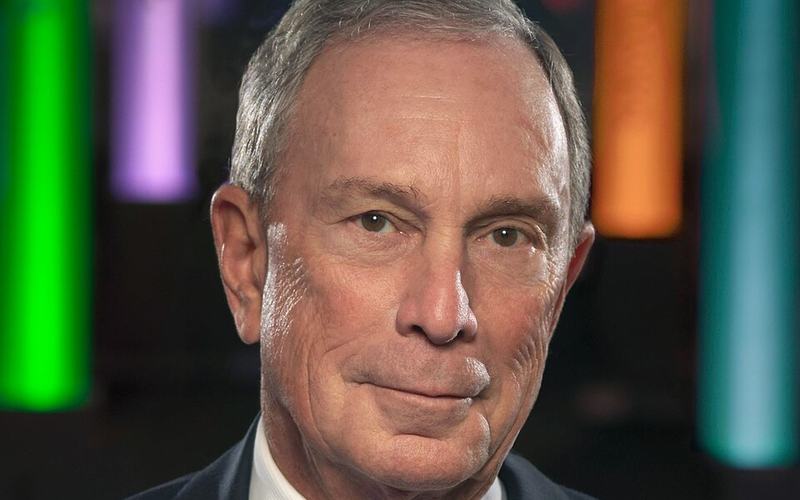
Former New York City Mayor Michael Bloomberg is contributing nearly $80 million to Democratic campaigns and political groups ahead of the November 2026 midterm elections, directing much of the money toward House races as Democrats attempt to regain control of Congress during President Donald Trump’s administration.
Bloomberg’s contributions in September and October place him among the largest Democratic donors of the election cycle, with at least $50 million going toward House contests. The spending comes as Republicans face political headwinds over the administration’s military operations and economic policies, including concerns about the cost of living.
Bloomberg’s political adviser, Howard Wolfson, said the former mayor views his financial support as a form of participation in American democracy, while acknowledging that his wealth allows him to contribute on a far greater scale than most Americans.
The donations include $24 million for Everytown for Gun Safety, the gun-control organization Bloomberg co-founded, and $16 million for House Majority PAC, a major super PAC supporting Democratic House candidates.
House Minority Leader Hakeem Jeffries (D-NY) welcomed the financial support, citing Bloomberg’s role in the 2018 midterm elections, when Democrats won control of the House during Trump’s first term. Jeffries said the latest contributions could again help Democrats secure a House majority.
Bloomberg’s spending extends beyond congressional races. He has directed $5 million to a super PAC affiliated with the League of Conservation Voters, $2.5 million toward Texas Democratic Senate nominee James Talarico, and $8 million to support Democratic gubernatorial candidates in six battleground states. Another $2.5 million went to New York Gov. Kathy Hochul’s reelection campaign, while $3.5 million was directed to an organization supporting Democratic candidates with scientific and medical backgrounds.
The financial push reflects Bloomberg’s interest in securing a sizable Democratic majority in the House, rather than simply giving the party a narrow advantage. Wolfson argued that the difference between a 221-seat majority and a 230-seat majority would be significant, potentially giving Democratic leaders greater room to advance legislation without depending on a small number of vulnerable lawmakers.
Despite his substantial financial backing for Democrats, Bloomberg remains wary of the party’s progressive wing, particularly its positions on Israel. His advisers describe him as a political moderate and suggest that his ideological preferences could influence which candidate he supports in the 2028 presidential race.
Wolfson said Bloomberg is a pragmatist and centrist, indicating that the former mayor would likely favor a presidential candidate who shares those political views.

Comments
No comments yet. Be the first to share your thoughts.