
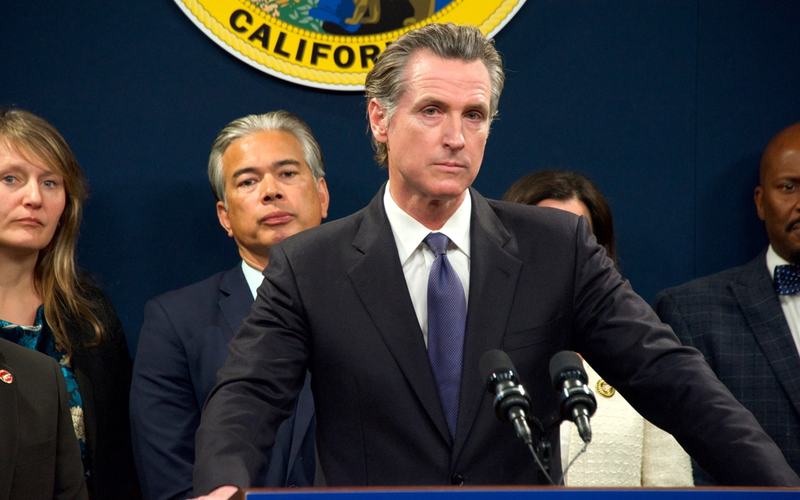
California Gov. Gavin Newsom has signed legislation requiring employers with five or more employees to incorporate anti-hate-speech instruction into existing workplace harassment-prevention training, prompting concerns from religious organizations about potential conflicts with their beliefs.
Assembly Bill 1803, signed by Newsom on Sept. 27, 2026, requires covered employers to train workers to recognize, report, and confront workplace speech that “vilifies, humiliates, or incites hatred” against people based on protected characteristics. The requirement is scheduled to take effect Jan. 1, 2028.
The law does not establish a separate training course or increase the existing minimum training hours. Instead, it adds the instruction to California’s current sexual harassment prevention training requirements, which generally apply to employers with five or more employees.
The main controversy centers on how the state will interpret the term “hate speech” and whether the requirement applies to churches and religious nonprofits. The legislation does not provide an exhaustive definition of the speech covered, raising questions about how employers will distinguish unlawful workplace harassment from the expression of religious beliefs that conflict with prevailing views on sexuality and gender identity.
The California Family Council, a conservative Christian advocacy organization, has warned that the law could put churches in a difficult position if training materials treat traditional Christian teachings on marriage and sexuality as hateful. The group has also questioned whether religious organizations are exempt from the requirement.
California’s existing Fair Employment and Housing Act generally excludes qualifying nonprofit religious organizations from its definition of an employer. However, the training mandate uses a separate definition of employer and does not expressly exempt churches. The extent to which the religious exemption applies to this specific requirement remains unresolved, according to reports on the legislation.
The legislation is also raising broader questions about religious liberty and free speech. Critics worry that employees or religious organizations could face pressure to endorse viewpoints that conflict with their convictions, while the law’s practical effects will depend in part on the training materials and guidance developed before it takes effect.
With the mandate not scheduled to begin until 2028, questions remain about its application to churches, religious schools, and other faith-based nonprofits. Religious freedom advocates are urging affected organizations to seek legal guidance rather than assume they are automatically exempt.

Comments
No comments yet. Be the first to share your thoughts.