
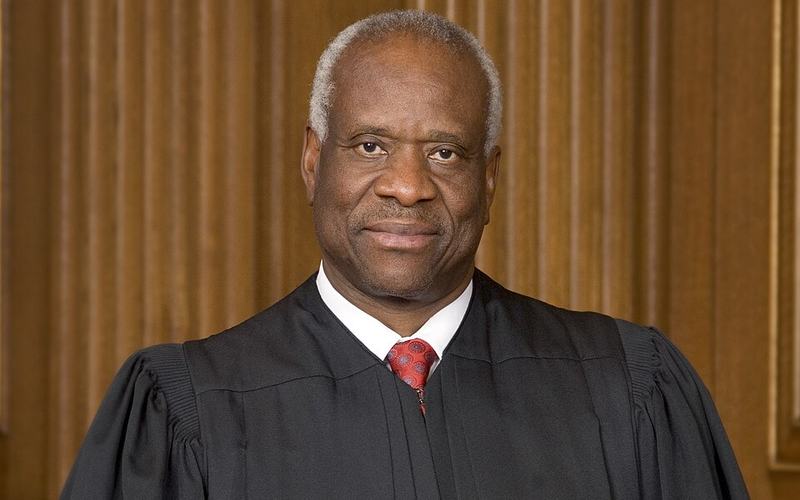
Republicans are prepared to move quickly on a Supreme Court nomination during the final weeks of the current Congress if either conservative Justice Samuel Alito or Justice Clarence Thomas announces plans to retire, giving President Donald Trump a limited opportunity to appoint another justice before Democrats take control of the Senate on January 3, 2027.
Senate Majority Leader John Thune (R-S.D.) previously indicated that Republicans could complete a confirmation during the post-election lame-duck session. In an interview with Punchbowl News in July, Thune said the roughly 60-day period between Election Day and the start of the new Congress would provide enough time to act.
“It can be done,” Thune said. “You're talking about basically 60 days post-election in the lame duck. I certainly wouldn't rule that out.”
Senate Judiciary Committee Chairman Chuck Grassley (R-Iowa) and retiring Sen. Thom Tillis (R-N.C.) are among the Republicans who have signaled support for quickly advancing a nominee if a vacancy arises. The urgency has increased following Democrats’ victories in Tuesday’s midterm elections, which are expected to give the party at least 54 seats and control of the chamber for the next Congress.
That leaves Republicans with only a short window to confirm another Trump nominee before Democrats gain the power to block his judicial appointments. The current Senate majority remains in place through the end of the year, but the opportunity may disappear if neither justice retires during that period.
For now, however, there is little indication that either Alito or Thomas intends to step down. People close to the Supreme Court and Republican senators told the New York Post that both justices have communicated that they plan to remain on the bench through the current term.
“[They] have both been very clear that they don't intend to retire this term. I don't expect that decision to change,” one Supreme Court insider told the newspaper.
A Republican Senate adviser expressed frustration that the justices did not retire earlier, when Republicans had more time and a more secure political position to confirm replacements.
“I wish they would have retired in the spring,” the adviser said. “[The] country will face the consequences of them not retiring in the spring for many years.”
The adviser also questioned whether public pressure could persuade either justice to reconsider, saying a campaign to push them out would be unlikely to succeed.
“I don't think it would work or anyone thinks there's a real chance,” the adviser said.
Alito, 76, has already addressed the speculation surrounding his future. During a September 30 interview with Bloomberg News, the justice said, “I intend to stick around through this term.” The current Supreme Court term is scheduled to continue through June 2027. Alito also said he had made the decision months earlier, before the midterm results reshaped control of the Senate. The New York Times has since reported that he told people close to him he does not intend to retire immediately.
Thomas, 78, has not publicly announced any retirement plans. If he remains on the Supreme Court through May 2028, he would become the longest-serving justice in the court’s history.
The possibility of a vacancy has also drawn attention from Senate Democrats. Sen. Richard Blumenthal (D-Conn.), a senior member of the Judiciary Committee, said earlier this fall that the panel would almost certainly hold up a successor to either Alito or Thomas.
A lame-duck confirmation of a Supreme Court justice would also be historically unusual. The last time a justice retired during a post-midterm lame-duck session was in 1922, according to the Congressional Research Service. The Senate has confirmed lower-court judges during previous lame-duck sessions, but no Supreme Court justice has been confirmed in one since the ratification of the 20th Amendment in 1933.
With Democrats preparing to take control, Republicans face the possibility that a vacancy arising during the remainder of Trump's term could go unfilled until a future Republican administration. The immediate question is whether either justice will change course before the current Senate's term expires, leaving Republicans with a narrow opportunity to preserve the court's existing conservative majority.

Comments
No comments yet. Be the first to share your thoughts.