
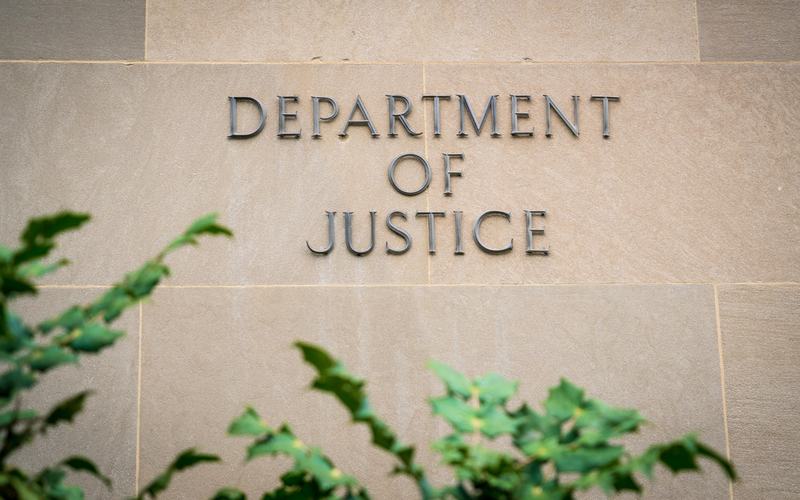
The Department of Justice has threatened an antitrust investigation into the American Bar Association unless it revises accreditation rules restricting how much adjunct professors can teach at law schools.
Associate Attorney General Stanley Woodward issued the warning in an Oct. 7 letter to the ABA’s Council of the Section of Legal Education and Admissions to the Bar, which oversees law school accreditation. Woodward gave the organization 15 days to change the rules or explain why they do not violate federal antitrust law.
Woodward argued that adjunct professors typically earn less than full-time faculty while often bringing valuable real-world legal experience into the classroom. Restrictions on their teaching hours could undermine legal education and contribute to rising tuition costs, he wrote.
One accreditation standard requires full-time faculty to teach “substantially all of the first one-third of each student's coursework,” limiting the role adjunct instructors can play in first-year classes. Woodward argued that the restriction lacks a clear justification based on instructional quality. He also teaches law as an adjunct professor at Catholic University.
The ABA proposed eliminating the first-third requirement last month, but Woodward indicated that the proposed changes would not fully address the department’s concerns. The association’s accreditation council said it plans to respond to the Justice Department.
The dispute comes amid broader Republican criticism of the ABA over its influence on legal education and positions on issues including abortion, affirmative action and transgender procedures.
The Trump administration has also challenged the ABA’s authority as an accreditor. The Education Department has initiated proceedings to revoke federal recognition of its law school accreditation council, a move that could affect schools’ eligibility to participate in federal student aid programs.
Graduation from an ABA-accredited law school is required to sit for the bar exam in many states, although Texas dropped that requirement earlier this year.
The ABA has separately clashed with the Trump administration over executive orders targeting several major law firms. The association sued the administration in 2025, challenging actions that included restrictions on security clearances, building access, and government contracts.
The latest dispute places the ABA’s accreditation standards under renewed federal scrutiny, with potential consequences for law schools, tuition costs, and the role of practicing legal professionals in training future attorneys.

Comments
No comments yet. Be the first to share your thoughts.