
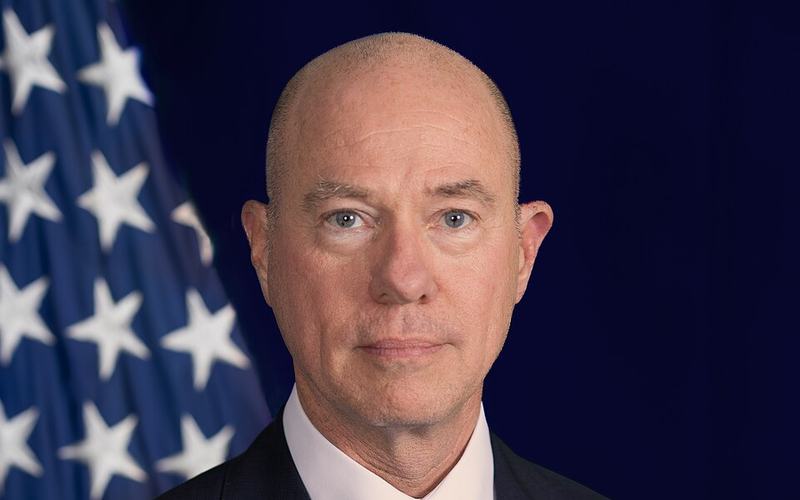
Federal Aviation Administration Administrator Bryan Bedford accepted responsibility Wednesday for last week's nationwide air traffic shutdown, which triggered more than 18,000 flight cancellations and thousands of additional delays across the United States.
Speaking at an aviation event hosted by The Hill and attended by lawmakers and industry officials, Bedford apologized for the disruption and pushed back against criticism directed at Transportation Secretary Sean Duffy.
"I take full responsibility for it," Bedford said. "I wish people would lay off the secretary. He's got a lot of work to do, but I'm the guy they hired to get this done. So blame me if we need to blame somebody. Blame me."
Bedford characterized the outage as "a knee scrape" while acknowledging the disruption it caused travelers. The ground stop lasted more than four hours, making it the longest nationwide shutdown of its kind since the Sept. 11, 2001, terrorist attacks.
Investigators traced the failure to a malfunctioning router that overwhelmed the FAA's communications network. The equipment had been installed in El Dorado, Arkansas, as part of an upgrade managed by government contractor L3Harris Technologies. The excessive data traffic disrupted communications between pilots and air traffic controllers before spreading to radar systems.
Duffy said Tuesday that investigators had successfully recreated the failure but had not determined why the router began transmitting excessive data. Federal intelligence agencies have found no evidence of a cyberattack, according to the transportation secretary. The FAA has suspended installation of the affected router model while the investigation continues.
The incident has also intensified debate over the condition of the country's aging air traffic control infrastructure and the administration's proposed spending to modernize it. Bedford defended the Trump administration's request for an additional $50 billion, arguing that decades of temporary repairs and deferred upgrades have left the system vulnerable to major disruptions.
"We have continued to patch it and duct tape it and kick the can down the road," Bedford said.
The administration initially sought $30 billion before increasing its modernization proposal to $50 billion, drawing skepticism from lawmakers concerned about the size of the request. Bedford acknowledged that congressional concerns were understandable but argued that the money already approved for modernization has been committed, even when payments are still awaiting equipment deliveries.
Senate Commerce Committee Chairman Ted Cruz, R-Texas, expressed doubts that Congress would approve the full amount.
"I don't think the full $50 billion will be funded," Cruz said Tuesday, according to NBC Washington.
Bedford maintained that the administration intends to pursue a comprehensive overhaul rather than continue relying on temporary fixes.
"Let's do it right, let's fix all of it," he said.

Comments
No comments yet. Be the first to share your thoughts.