
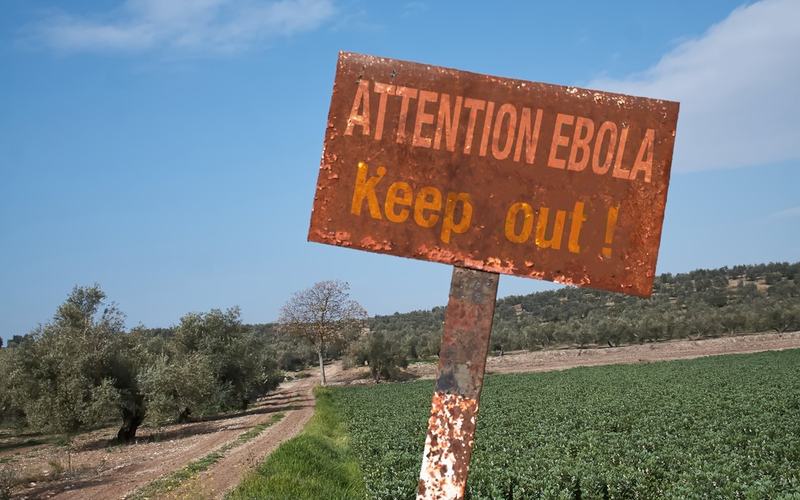
An Ebola outbreak in the eastern Democratic Republic of Congo has infected more than 11,000 people and killed over 5,500 since it was declared on May 15, making it the second-largest Ebola outbreak ever recorded worldwide.
The outbreak is driven by the rare Bundibugyo strain and has spread faster than any previous Ebola outbreak on record, according to government data. The number of infections and deaths is rising at roughly twice the rate recorded during the first six months of the 2014-2016 West African outbreak, which ultimately infected more than 28,600 people and killed over 11,000 across Guinea, Liberia and Sierra Leone.
The scale of the crisis is unprecedented for Congo, which is experiencing its 17th Ebola outbreak. The current outbreak has already surpassed the country's previous record, set during the 2018-2020 outbreak, when 3,481 cases and 2,299 deaths were recorded.
Despite billions of dollars in pledged assistance, efforts to contain the disease continue to face serious obstacles. Insecurity in affected communities has led to attacks on health workers, vehicles and surveillance teams, while distrust of outside responders has made it harder to reach people at risk.
World Health Organization Director-General Tedros Adhanom Ghebreyesus identified insecurity as one of the greatest challenges facing the response during remarks to reporters Tuesday.
Medical supplies and personnel have also struggled to reach communities beyond the outbreak's original epicenter in Ituri province. Médecins Sans Frontières, an international medical charity, warned last week that essential resources were still not reaching some of the hardest-hit areas.
Staffing problems have further complicated the response. Health workers have gone on strike over working conditions and unpaid salaries, with some reportedly waiting for payment since August. Tedros said the delays were slowing containment efforts, while Congo's government has said it is working to resolve the payment problems.
Funding remains another concern. Approximately $2.9 billion has been pledged for the response, but less than half has actually been disbursed, according to Africa's leading public health agency. The agency has urged international donors to coordinate closely with the government in Kinshasa to prevent resources from being wasted through overlapping or duplicated efforts.
With infections and deaths continuing to climb, health authorities face mounting pressure to deliver supplies, restore staffing and improve security in affected communities before the outbreak spreads further.

Comments
No comments yet. Be the first to share your thoughts.