
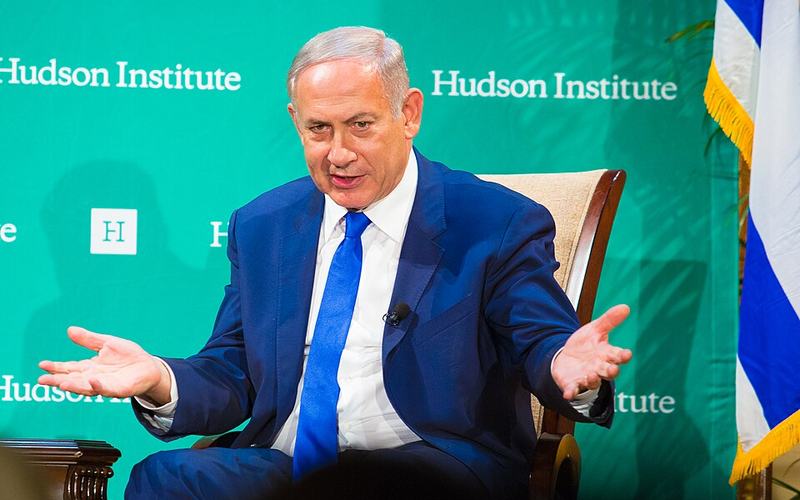
Israeli Prime Minister Benjamin Netanyahu faced an uncertain path to remaining in power Wednesday after exit polls from Israel’s national election suggested that his right-wing bloc had failed to secure a clear parliamentary majority. The preliminary projections pointed to a closely divided 120-seat Knesset, leaving Netanyahu and his principal rival, former military chief Gadi Eisenkot, facing a difficult struggle to assemble the coalition needed to govern.
An updated Channel 12 exit poll projected 52 seats for Netanyahu’s bloc, 49 for the opposition and 19 for the predominantly Arab Joint List and Ra’am parties, according to The Times of Israel. Earlier projections had placed Netanyahu’s allies at 50 seats and the opposition at 52. Other major Israeli television exit polls initially showed the two main blocs tied at approximately 51 seats each, with Arab-led parties holding around 18.
The projections are not final results, and the official count could change the balance of power. With 61 seats required for a parliamentary majority, neither side appeared certain to secure enough support to govern independently.
Eisenkot declared that the exit polls reflected a public rejection of Netanyahu’s leadership and vowed to form a new government. Speaking to cheering supporters early Wednesday, he promised what he described as “a new era, an era of hope” for Israelis.
“Today, Israel went out to a referendum over the leadership that will lead Israel in the coming years,” Eisenkot said. “The people decided in favor of change.”
The former military chief also warned Netanyahu against using national security decisions for political purposes while serving as caretaker prime minister. His remarks appeared to reference reports that Netanyahu had considered an attack against Iran in the days leading up to the election.
Netanyahu’s supporters view him as an experienced leader who has defended Israel’s security and Jewish national identity through years of regional conflict. His opponents accuse him of deepening political divisions, undermining judicial independence and prolonging the war in Gaza for political reasons. Netanyahu, who is facing an ongoing corruption trial, denies wrongdoing.
The election was widely seen as a referendum on Netanyahu’s lengthy tenure, which has been marked by bitter disagreements over security policy, religious influence and military conscription. The October 7, 2023, Hamas terrorist attack and the ensuing war in Gaza, along with conflicts involving Lebanon and Iran, remained central issues for voters. Israel has also faced growing international criticism over its military operations.
Military service emerged as another major campaign issue, particularly the exemption of many ultra-Orthodox Jewish men from compulsory service. Opposition parties have pledged to pursue changes to conscription rules while strengthening judicial independence and improving Israel’s international standing.
Turnout exceeded 77% of eligible voters, the highest level since 1999, according to Israel’s Central Elections Committee. More than 7 million people were eligible to vote.
The immediate challenge for both political camps is assembling a coalition. Eisenkot could need support from Arab-led parties to reach a majority, an arrangement that could alienate other opposition factions. Netanyahu and his allies are likely to challenge such a partnership politically, particularly given longstanding disagreements over the role of Arab parties in Israel’s government.
Israel’s president will ultimately ask the political leader considered best positioned to form a government to begin coalition negotiations. Winning the most seats does not automatically guarantee the premiership, as the candidate must secure sufficient parliamentary support.
If neither side can assemble a viable coalition, Israel could face another election as early as next year. The country held five national elections between April 2019 and November 2022 amid similar political deadlocks.
For now, the exit polls have left Netanyahu’s political future uncertain, with the final results and negotiations among rival parties set to determine whether he remains prime minister or Eisenkot forms a new government.

Comments
No comments yet. Be the first to share your thoughts.