
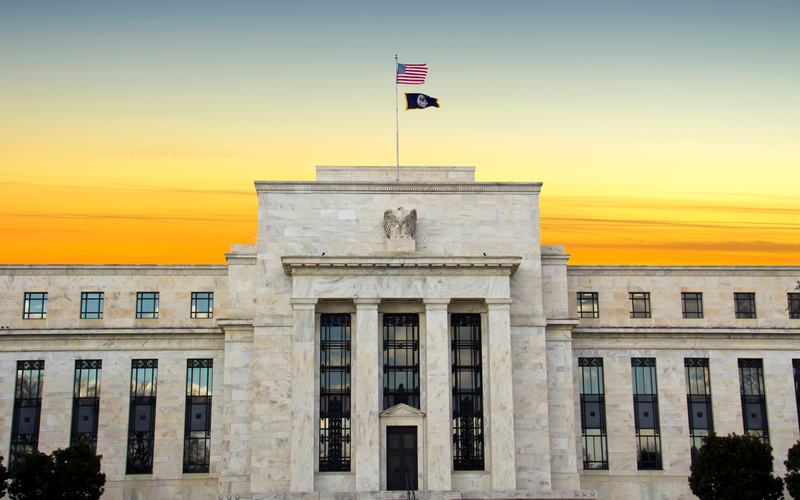
The Federal Reserve is preparing to raise the asset thresholds that determine when banks face heightened federal oversight, a move that could ease regulatory burdens for midsize lenders and encourage additional mergers and acquisitions.
The central bank is expected to propose reindexing the thresholds to account for inflation and economic growth, according to people familiar with the matter. The changes could be proposed later this year and would affect requirements involving capital, liquidity, stress testing and regulatory reporting.
Current rules impose additional requirements at $100 billion in assets, with stricter standards beginning at $250 billion and another tier at $700 billion. Those thresholds were established in 2019 and have not been adjusted as the U.S. economy and banking sector have grown.
Under the potential changes, the highest threshold could move closer to $1 trillion, while some requirements currently triggered at $100 billion could move toward $150 billion. A reindexing based on nominal gross domestic product could place the highest threshold at approximately $960 billion.
Banking industry representatives have argued that crossing the current thresholds can impose substantial costs, requiring additional compliance personnel, risk-management systems, stress-testing capabilities and regulatory reporting infrastructure. The expenses can reach tens of millions of dollars annually.
Several major regional banks could benefit from the changes. U.S. Bancorp, Capital One, PNC Financial Services and Truist are among the lenders approaching the $700 billion level and could gain additional room to expand before facing some of the Federal Reserve's most demanding supervisory requirements.
Other banks, including Western Alliance and Zions, could also grow beyond $100 billion without immediately facing every requirement currently associated with that tier. Pinnacle Financial Partners and other lenders between $100 billion and $150 billion could potentially see some existing requirements removed.
The potential changes are part of a broader push by President Donald Trump's administration to reduce regulatory barriers in the banking industry. Federal Reserve Vice Chair for Supervision Michelle Bowman said in January that the central bank would consider reindexing the thresholds and pointed to nominal GDP as one possible measure.
Bank executives and industry attorneys have suggested that raising the thresholds could encourage more consolidation among regional and midsize lenders.
Banks with between $50 billion and $700 billion in assets completed only 33 bank and thrift acquisitions over the past decade, according to S&P Global Market Intelligence. Seven such deals were announced last year, including Fifth Third Bancorp's $10.9 billion acquisition of Comerica.
The 2010 Dodd-Frank Act established enhanced supervisory requirements following the financial crisis, while a 2018 law raised some of the statutory thresholds. Congress retained certain requirements, including stress testing for banks with at least $100 billion in assets and enhanced prudential standards for banks above $250 billion.
The Federal Reserve nevertheless retains discretion over additional supervisory requirements, including capital planning, liquidity, and reporting rules. The potential reindexing would apply to those areas while leaving requirements that Congress established in law unchanged.

Comments
No comments yet. Be the first to share your thoughts.