
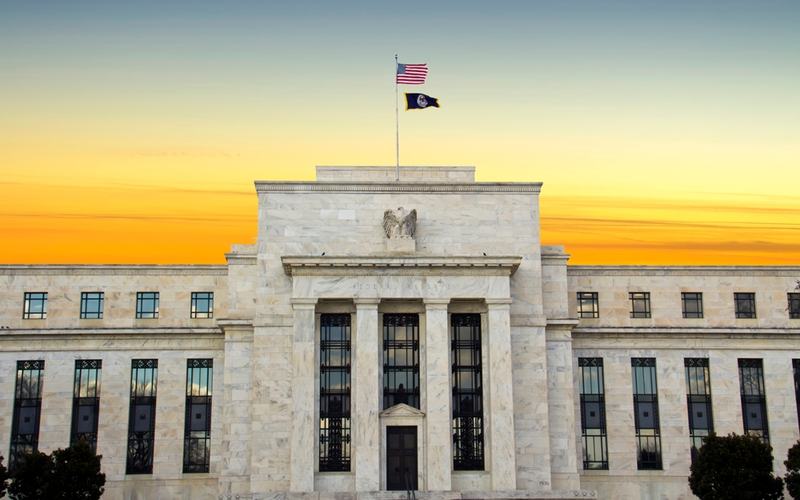
The Federal Reserve voted Wednesday to keep its benchmark interest rate unchanged at a target range of 3.75% to 4%, pausing after raising rates at its previous meeting in September as policymakers assess whether inflation is moving back toward the central bank’s long-term target.
The Federal Open Market Committee voted 10-2 to maintain the current range, with Governor Lisa Cook and Cleveland Fed President Beth Hammack dissenting in favor of an immediate quarter-percentage-point increase. The decision came six days before the Nov. 3 midterm elections, in which Democrats are seeking to regain control of Congress from Republicans.
“The accumulation of more information will help the Committee determine the policy stance appropriate to ensure a timely return of inflation to the Committee's two percent goal,” the Fed said in its statement.
The central bank has struggled to bring inflation back to its 2% target, with households and businesses continuing to face elevated costs after years of price increases. Consumer inflation reached 3.7% in September, exceeding expectations and moving closer to a three-year high recorded in May.
President Donald Trump’s economic policies have become a central issue in the midterm campaign, particularly as Americans contend with higher prices for energy and other necessities. The administration’s war against Iran, launched in late February, has contributed to rising energy costs, while Trump’s sweeping tariff policies have added uncertainty to the economic outlook.
Investment in artificial intelligence technology and the construction of large data centers have also contributed to economic pressures, as businesses pour money into the infrastructure needed to support expanding computing demands.
Despite persistent inflation, the Fed said economic activity in the United States was expanding at a “strong” pace, upgrading its assessment from the previous meeting six weeks earlier. The labor market has also remained relatively stable, with unemployment hovering around 4.2% over the past year, although job growth has been concentrated in a limited number of sectors.
The decision to hold rates followed signals from key policymakers, including Kevin Warsh, that an immediate additional increase was not necessary. Speaking in Bangkok earlier this month, Warsh said economic conditions had “broadly conformed” to policymakers’ expectations, fueling speculation that the central bank would leave rates unchanged in October.
The decision nevertheless drew questions from economists who believe additional tightening may be necessary to contain inflation. Wendy Edelberg, a senior fellow at the Brookings Institution, questioned the logic of holding rates steady after the September increase, particularly given the relative stability of the labor market.
“If there was a reason to raise interest rates at the last meeting, I think that there's just as compelling of an economic reason to raise interest rates at this meeting,” Edelberg told AFP before the announcement.
The Fed operates under a dual mandate to maintain maximum employment and stabilize prices. Its primary policy tool is the federal funds rate, which influences borrowing costs throughout the economy. Higher rates generally make borrowing more expensive, helping restrain demand and inflation, but can also slow economic growth. Lower rates can encourage spending and investment while potentially adding to price pressures.
The decision also comes as other major economies confront inflationary pressures. Canada’s central bank raised its benchmark interest rate to 2.5% on Wednesday, marking its first increase since July 2023.
For American voters, the Fed’s decision underscores the continuing challenge of controlling inflation without unnecessarily weakening the labor market. With the midterm elections approaching, the cost of living and the broader performance of the economy remain key issues for both parties as they compete for control of Congress.

Comments
No comments yet. Be the first to share your thoughts.