
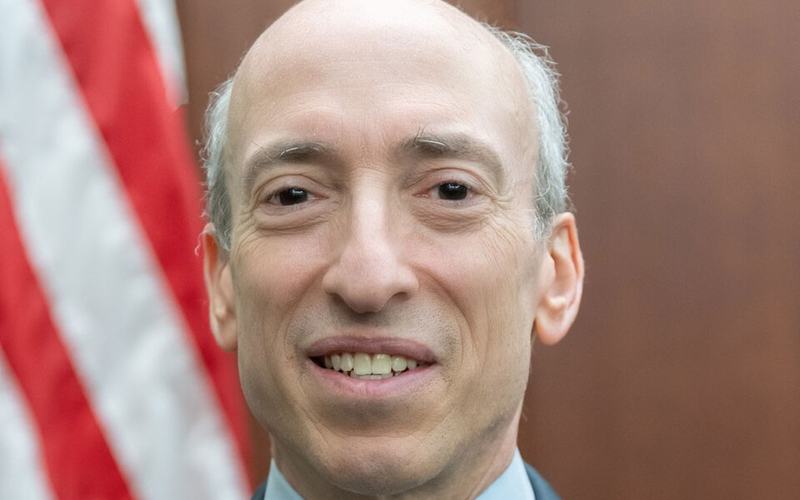
Former Securities and Exchange Commission Chairman Gary Gensler warned that the massive investment fueling the Super Intelligence (SI) boom could lead to a major economic downturn before November 2028. In an interview with CNN, Gensler said the industry has already entered bubble territory and questioned whether the eventual correction would produce a mild recession or a more severe economic shock.
"It's already a bubble," Gensler told CNN. "The only question is if it's a soft recession or something more dramatic."
Gensler pointed to the enormous sums being poured into data centers, advanced computing chips and other infrastructure supporting SI development. He cited estimates that annual investment in SI infrastructure has reached approximately $800 billion, while major technology companies are spending five times as much in 2026 as they did just three years ago.
He compared the current investment cycle to previous technological expansions, including the railroad boom, the development of electricity in the 1920s and the internet boom of the 1990s. In each case, substantial spending initially fueled rapid growth before investment eventually slowed and companies faced financial pressure.
Gensler also raised concerns about the financing behind the SI expansion, warning that heavy borrowing and complicated financial arrangements could leave companies and lenders exposed if expected returns fail to materialize. He identified smaller cloud-computing providers that lease advanced computing capacity to technology developers as particularly vulnerable to bankruptcies.
"The major companies will survive. It's these neocloud companies where we're going to see some breakage and bankruptcies," Gensler said.
However, not all market observers share his outlook. Ed Yardeni, president of Yardeni Research, described Gensler's scenario as plausible but argued that the market could correct itself without a major collapse. Yardeni pointed to lower price-to-earnings valuations among chipmakers as evidence that the market may not be experiencing the same level of excessive speculation seen during previous bubbles.
Gensler said he expects a repricing of technology companies and broader economic weakness before the next presidential election in November 2028, although he acknowledged that the timing and severity remain uncertain.

Comments
No comments yet. Be the first to share your thoughts.