
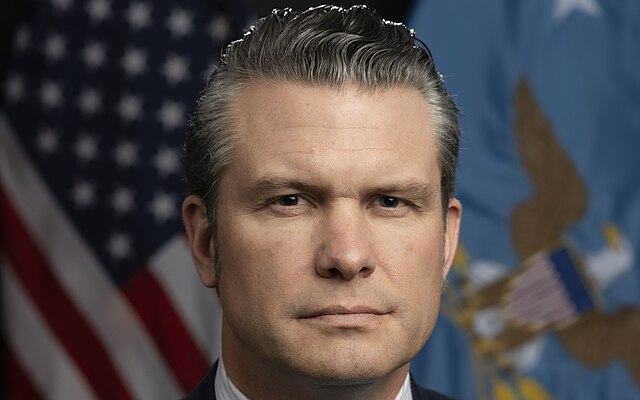
Secretary of War Pete Hegseth signed a memo Tuesday directing the military service academies to stop granting tenure to civilian faculty members, marking another step in the Trump administration's effort to reshape military education around warfighting.
The directive applies to civilian faculty at the U.S. Military Academy at West Point, the U.S. Naval Academy and the U.S. Air Force Academy. The memo does not appear to remove tenure from professors who already hold it.
"To ensure our educational institutions remain firmly focused on this warfighting mission, we must address the structural mechanisms that have allowed civilian academic norms to dilute our focus," Hegseth wrote.
Tenure typically provides professors with long-term job protection and can make termination possible only under limited circumstances, such as serious misconduct or financial emergencies. Supporters of tenure argue that the protection is important for academic freedom and allows professors to pursue controversial areas of research and teaching without fear of losing their positions.
Hegseth's memo takes a different view of the system, arguing that tenure has contributed to "academic stagnation, faculty complacency, and institutional inability to adapt to emerging needs." The secretary also argued that tenured faculty can push curricula toward academic research priorities rather than the military's mission of preparing future warfighters.
The role of civilian professors varies among the three academies. The Naval Academy has the largest share, with civilians making up roughly half of its approximately 600-member faculty.
Civilian instructors provide expertise in subjects that military officers generally do not study as part of their careers, including English and other humanities disciplines. The academies have traditionally combined officer training with a broad four-year college education.
Eric Merriam, a legal studies and political science professor at the University of Central Florida and a former Air Force Academy professor, said civilian faculty members often have greater teaching experience and academic credentials than their military counterparts.
Merriam also argued that the academies' traditional liberal arts education serves a purpose beyond military training by preparing future senior officers to think critically and understand different perspectives.
Hegseth's policy represents a shift away from that model, Merriam said, describing the move as a "retrenchment" from the broader academic role historically played by the service academies.
The policy comes as Hegseth and the War Department pursue broader changes to military education. Earlier this year, the Pentagon ended longstanding relationships with several prestigious universities that had served as pipelines for military leadership while establishing new relationships with Christian colleges and public universities.
The administration has also sought changes to schools operated by the military for children of service members. Those schools have introduced a course focused on Western civilization and Christianity as part of a broader effort to emphasize patriotic values and classical learning.
Officials at West Point, the Naval Academy, and the Air Force Academy did not immediately respond to questions about the new tenure policy, while Pentagon officials did not provide additional details about how the directive will be implemented.

Comments
No comments yet. Be the first to share your thoughts.