
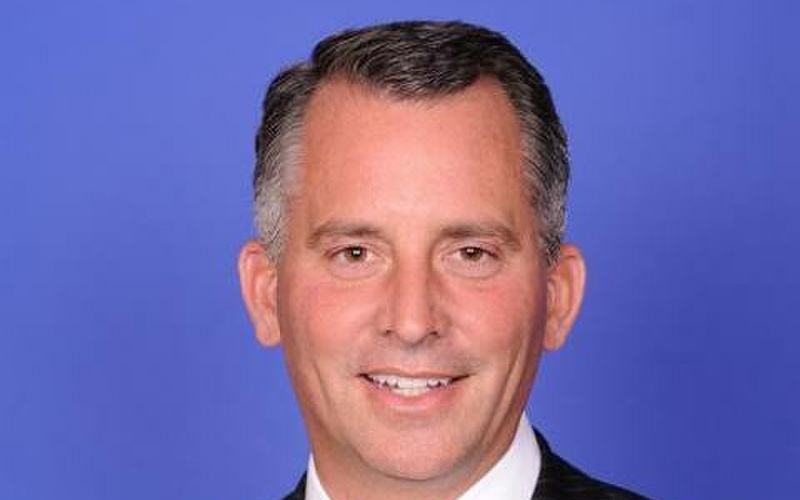
David Jolly, the Democratic nominee for governor of Florida, announced Sunday that he would not participate in any general-election debates against Republican Rep. Byron Donalds before the November 3 election. Jolly blamed what he called Donalds’ “repeated lies and bad faith,” arguing that debates would not produce a constructive discussion.
Jolly’s decision came only days after Donalds’ campaign announced that it had accepted three proposed debates. Jolly’s campaign had previously accepted two other debate proposals, but the campaigns failed to reach an agreement on which events both candidates would attend. Jolly ultimately rejected the possibility of debating Donalds altogether.
The Democratic candidate has attempted to place the responsibility for the debate dispute on Donalds, arguing that the Republican campaign tried to establish its own terms rather than negotiate an event acceptable to both campaigns. Donalds has countered that he agreed to three debates and accused Jolly of backing away from the opportunity to defend his positions in front of voters.
Jolly later wrote on X, “You can’t debate a liar.” Donalds responded by pointing to the competing numbers of proposed debates, writing, “I said 3 debates. Jolly said 12 debates. Yesterday, Jolly said no debates. Who’s the liar Dave?”
I said 3 debates.
— Byron Donalds (@ByronDonalds) September 21, 2026
Jolly said 12 debates.
Yesterday, Jolly said no debates.
Who’s the liar Dave? https://t.co/mb2Wv9ZWIQ pic.twitter.com/2cu6JpaCJs
The refusal puts Jolly in the unusual position of seeking the governor’s office while declining to share a debate stage with his Republican opponent. The decision also comes as the race enters its final weeks, when voters traditionally have opportunities to compare the candidates' positions and records directly. A University of Central Florida political science professor told WUSF that debates can provide voters with information they may not see in more scripted campaign appearances.
The governor’s race is especially significant because the winner will succeed Republican Gov. Ron DeSantis, who is leaving office after two terms. Donalds won the Republican nomination, while Jolly secured the Democratic nomination, setting up a general-election contest between two candidates with sharply different political backgrounds and platforms.
The debate dispute could have consequences beyond the two campaigns. If Donalds and Jolly never appear together, Florida's 2026 governor's race would be the first since 1974 to go without a general-election gubernatorial debate. Florida A&M University and Spectrum News Florida had announced plans for a Sept. 29 debate, but Jolly's refusal has put the event's future in question.
Donalds has continued to challenge Jolly to defend his positions publicly, while Jolly says he will continue taking his campaign directly to voters instead of participating in debates. With the election approaching, the disagreement has shifted attention from the candidates' policy differences to whether Florida voters will get the chance to see them answer each other directly on the same stage.

Comments
No comments yet. Be the first to share your thoughts.