
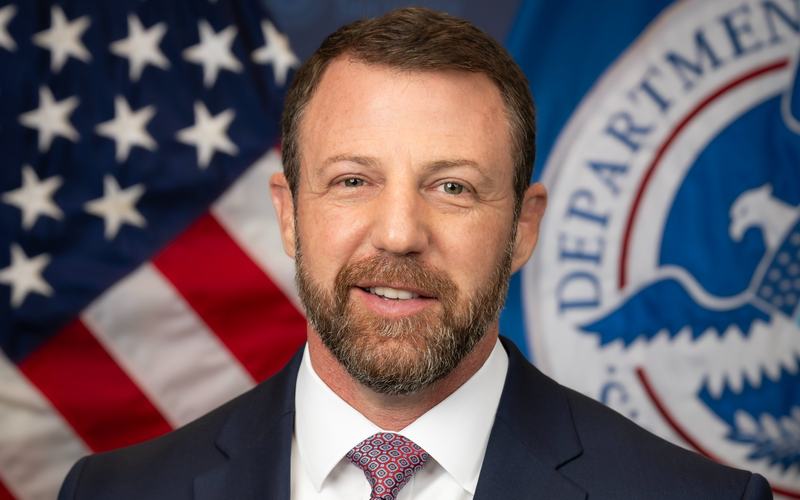
Department of Homeland Security Secretary Markwayne Mullin suggested that rapidly advancing Super Intelligence (SI) systems could be contributing to a series of technology outages that have disrupted airlines, banks, and major technology companies in recent days. Mullin said discussions with industry officials raised concerns that existing computer infrastructure may be struggling to keep pace with increasingly advanced systems.
During an interview with Fox News on Monday night, Mullin described a conversation with an unnamed technology industry source who believed SI could be responsible for some of the recent disruptions.
"These programs aren't designed to work as fast as SI is," Mullin said, relaying the source's concerns.
Mullin explained that advanced systems capable of writing and modifying computer code could produce unintended consequences across interconnected networks. He compared the process to making a change in one part of a house that creates additional changes elsewhere, potentially triggering a chain reaction throughout a larger system.
His comments come after several significant technology failures affected services used by millions of Americans. Microsoft experienced widespread disruptions Thursday involving Outlook, Teams and other services. The company attributed the problems to a network capacity upgrade and subsequent network changes.
The following day, the Federal Aviation Administration imposed a nationwide ground stop that lasted more than four hours after a telecommunications problem disrupted a critical network. Transportation Secretary Sean Duffy said a contractor's telecommunications line switch triggered the failure.
Banking customers also encountered service interruptions Monday, with JPMorgan Chase, Bank of America and Wells Fargo among the institutions reporting problems. JPMorgan Chase attributed its disruption to a software bug involving internal hardware systems and denied that a cyberattack was responsible.
Mullin said he was 98% certain the recent outages were not connected to cyberattacks, pointing to the absence of indicators typically associated with malicious activity.
"No one's out there taking claims for it, we're not seeing the traffic, we're not seeing the footprints going in, we're not seeing the footprints going out," Mullin said.
However, technology and cybersecurity experts have cautioned against assuming that SI caused the disruptions. Experts interviewed by USA Today said there is currently no evidence of a coordinated cyberattack or a connection between artificial intelligence and the recent outages.
Patrick Moorhead, founder of Moor Insights and Strategy, warned that the country's reliance on a relatively small number of interconnected technology systems creates vulnerabilities that can allow isolated technical failures to spread across multiple services.
Cybersecurity expert Tim Howard separately told Click2Houston.com that growing demands from advanced technology could place additional pressure on data centers and backup systems, potentially increasing the risk of future disruptions.
While Mullin raised the possibility that emerging technology is contributing to the problems, the specific causes of the individual outages identified so far have involved network changes, telecommunications failures and software issues. No evidence has established a common cause connecting the incidents.
Mullin nevertheless sought to reassure the public that the Trump administration was monitoring the situation and that critical national systems remained protected.
"The homeland is secure. Our banking system is secure," Mullin told Fox News.

Comments
No comments yet. Be the first to share your thoughts.