
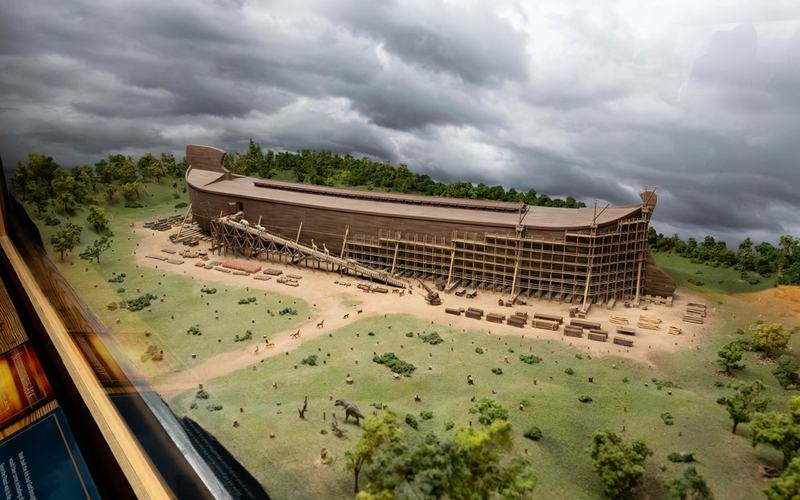
A long-running search for evidence of Noah’s Ark has entered a new phase in eastern Turkey, where researchers are drilling into the mysterious Durupinar Formation after underground surveys detected structures they say do not clearly resemble solid bedrock.
The formation, located in Ağrı Province near Mount Ararat, has attracted speculation since it was identified in a 1959 aerial survey. The 157-meter-long formation has the distinctive shape of a boat and has repeatedly been proposed as a possible location of the biblical Ark. A 2026 research project led by Prof. Cenker Atila of Sivas Cumhuriyet University received official authorization from Turkish authorities to conduct geological and archaeological investigations at the site.
Researchers spent roughly 90 days conducting fieldwork this year, with about 20 scientists and students from five countries participating. The team collected nearly 1,000 soil samples from approximately 150 locations while using GPS mapping, ground-penetrating radar and core drilling to investigate the formation's interior.
Andrew Jones, founder of Noah's Ark Scans, said the latest radar work represents a new challenge to the longstanding geological explanation that the formation is simply natural rock shaped by geological processes. Researchers using deeper-penetrating radar reported layered underground reflectors, possible cavities and features with straight lines and right-angle intersections.
The research team has interpreted some of those anomalies as possible compartments, corridors or other internal structures. Earlier radar work conducted at the site also identified linear features beneath the surface. However, the researchers have emphasized that radar readings alone cannot establish what produced the anomalies, and the project's own materials state that its purpose is to document the formation rather than authenticate the biblical claim.
Preliminary soil testing has added another point of interest. Researchers say samples taken from inside the formation contained roughly 40% more carbon than samples collected outside it. Core samples containing organic material are now being examined to determine whether any of it could include remnants of wood. Recent fieldwork also produced pottery fragments whose age has not yet been established.
Jones has argued that the findings support his belief that the Durupinar Formation contains the buried remains of Noah's Ark. Other members of the expedition have made even stronger claims about the site being artificial, but those conclusions have not been independently established.
The broader geological question remains unresolved. The formation has traditionally been explained as a natural feature, with geological processes such as deformation, landslides and erosion cited as possible causes of its unusual shape. The new investigation is intended to test those explanations through physical samples and additional geophysical data rather than relying solely on the formation's appearance.
Laboratory analysis of the soil and core samples is expected to continue through the winter, with the research team planning to release its first comprehensive findings in 2027.
For now, the drilling has not established that the formation is Noah's Ark. It has, however, produced additional material for researchers to analyze as the decades-old debate over the site continues

Comments
No comments yet. Be the first to share your thoughts.