
Republicans are remaining competitive in several closely watched U.S. Senate races, according to a new batch of polling from Co/Efficient, offering a more mixed picture than forecasts predicting widespread GOP losses in November.
The midterm elections will determine whether President Donald Trump faces a Democrat-controlled Congress during the final two years of his term or whether Republicans can retain control of both chambers. The GOP currently holds narrow majorities, leaving control of the House and Senate vulnerable to shifts in a relatively small number of competitive races.
Historical trends generally favor the opposition party in midterm elections, giving Democrats reason to pursue congressional control. However, the latest figures show Republican candidates leading in several contests, while other races remain close.
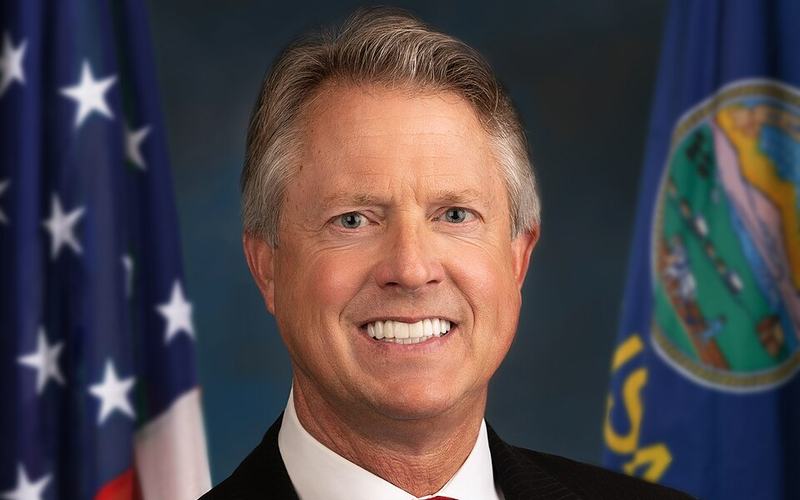
In Kansas, Republican Sen. Roger Marshall leads Democratic challenger Adam Hamilton by five percentage points. Nebraska Republican Sen. Pete Ricketts holds a similar five-point advantage over independent candidate Dan Osborn.
Alaska Republican Sen. Dan Sullivan leads Democrat Mary Peltola by two points in a four-way contest, while Republican Rep. Ashley Hinson is ahead of Democrat Josh Turek by four points in Iowa’s open-seat race.
In Maine, Republican Sen. Susan Collins holds a two-point lead over Democrat Troy Jackson, according to Interactive Polls. The race is also being closely watched because other polling has shown Collins trailing Jackson.
Ohio’s Senate contest is similarly competitive. Republican Sen. Jon Husted holds a one-point lead over former Democratic Sen. Sherrod Brown in the Interactive Polls figures, although other surveys have shown Husted behind.
The Minnesota race for an open Senate seat remains tight, with Democrat Peggy Flanagan holding a one-point lead over Republican Michele Tafoya. In Michigan, Republican former Rep. Mike Rogers and Democrat Abdul El-Sayed are tied, according to the polling.
New Hampshire’s Senate contest between Republican John Sununu and Democrat Chris Pappas is also tied in the Interactive Polls results, with Election Day approaching.
The figures offer a snapshot of a closely contested Senate map, but they do not establish which party will control the chamber after the election. The reporting on the polling did not provide sample sizes or margins of error, making it difficult to assess the precision of the individual results.
The contrast between the surveys also underscores the uncertainty surrounding several battleground races. While Republicans hold narrow leads in multiple contests, Democrats remain competitive in Maine, Ohio, Minnesota, Michigan, and New Hampshire, leaving control of the Senate unresolved.

Comments
No comments yet. Be the first to share your thoughts.