
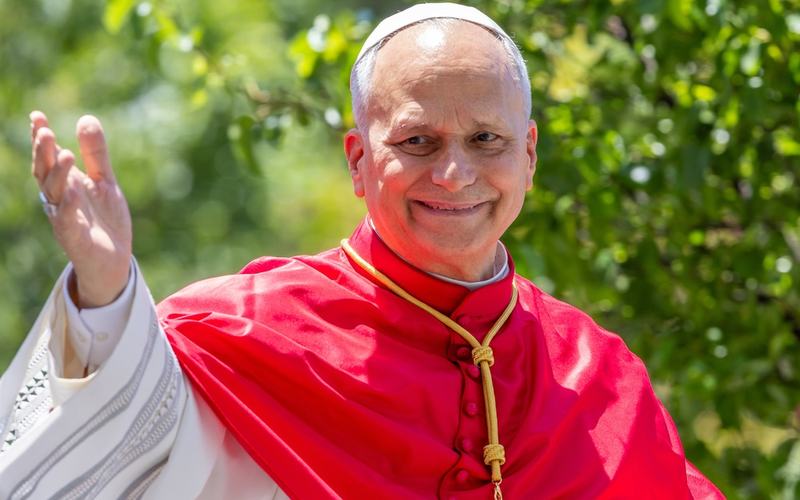
Pope Leo XIV departed Rome on Friday for a 12-day tour of Uruguay, Argentina and Peru, beginning the longest and most extensive international journey of his papacy just weeks after undergoing surgery to remove a cancerous tumor from his right lung.
The 71-year-old pontiff is scheduled to visit 10 cities, travel approximately 31,000 kilometers and deliver nearly 40 speeches during the trip, which runs through November 17. The journey marks his return to Latin America, where he spent decades as a missionary priest and bishop, particularly in Peru, before becoming pope.
The Vatican confirmed last month that Leo's surgery on October 13 was successful and that subsequent examinations found the cancer was localized, with no additional oncological treatment required. His physician, Dr. Luigi Carbone, said there were no medical reasons preventing the pope from making the journey. Vatican officials have also said he has recovered well and will receive medical support throughout the trip.
Maria Montserrat Alvarado, the Vatican's communications chief, described the pope's stamina as excellent and said he was eager to return to the region. She pointed to his ability to sing during public appearances as an encouraging indication of his recovery.
Uruguay is the first stop, where Leo will remain through November 8. He is expected to arrive in Montevideo after a lengthy flight from Rome and meet with President Yamandú Orsi before addressing government officials and diplomats. His schedule also includes a visit to a neighborhood affected by gang violence, a Mass in the city of Paysandú and a prayer vigil at Montevideo's Centenario Stadium.
The visit is particularly significant because Uruguay is considered the most secular country in Latin America. Catholics account for approximately 36% of its population, the lowest proportion in the region, and regular church attendance remains limited. The country has also adopted a number of policies opposed by the Catholic Church, including the legalization of recreational marijuana, abortion and same-sex marriage. Uruguay recently became the first country in Latin America to approve assisted-dying legislation.
Leo is expected to emphasize the Catholic Church's teaching on human dignity, including its opposition to abortion and euthanasia, while encouraging Uruguayans to reconnect with the country's religious heritage. The visit is the first by a pope to Uruguay since St. John Paul II traveled there in 1988.
Church officials have expressed optimism about the public response. Tickets for the pope's prayer vigil at Centenario Stadium reportedly sold out within two days, prompting some local Catholic leaders to suggest that his arrival could renew interest in the country's religious traditions.
A major moment of the Uruguay visit will come Sunday in the city of Florida, where Leo is expected to celebrate the feast of Our Lady of the Thirty-three, the country's patroness. The small wooden image of the Virgin Mary has a longstanding connection to Uruguay's independence movement. According to tradition, 33 independence fighters acquired the statue and carried it with them during the struggle that led to the country's declaration of independence from the Brazilian Empire in 1825.
The next leg of the journey will take Leo to Argentina, the homeland of his predecessor, Pope Francis. He will visit Buenos Aires, Córdoba and Luján before traveling to Peru on November 11. Argentina has not hosted a papal visit since John Paul II traveled there in 1987.
Peru is expected to be the most personal portion of the trip. Leo served there for approximately two decades, first as a missionary and later as a bishop, and eventually became a Peruvian citizen. His itinerary includes Lima, Chiclayo, Cusco and Pucallpa. In Chiclayo, he will return to the diocese where he served as bishop, while his visit to Cusco will include encounters with communities in the Andes.
The journey also comes at a challenging time for Catholicism across Latin America, which remains home to roughly 40% of the world's Catholics but has experienced declining affiliation as evangelical churches expand and more people identify as nonreligious. Church leaders hope the pope's presence will strengthen Catholic communities and encourage renewed participation in religious life.
Leo is also expected to address broader challenges facing the region, including poverty, environmental destruction, arms trafficking and political instability. The Vatican has said the trip will emphasize faith, hope, peace and unity, while the pope is also scheduled to meet with victims of clerical sexual abuse.
Despite the demanding schedule and recent surgery, Leo has expressed enthusiasm about returning to the continent where he spent much of his life. The trip represents both a major test of his physical recovery and an opportunity to strengthen the Catholic Church's presence in a region that has played a central role in his own religious journey.

Comments
No comments yet. Be the first to share your thoughts.