
Prediction-market platforms Kalshi and Polymarket are facing a major test of their credibility as Americans vote in Tuesday's midterm elections, with traders pricing in a strong likelihood that Democrats will take control of both the House and Senate.
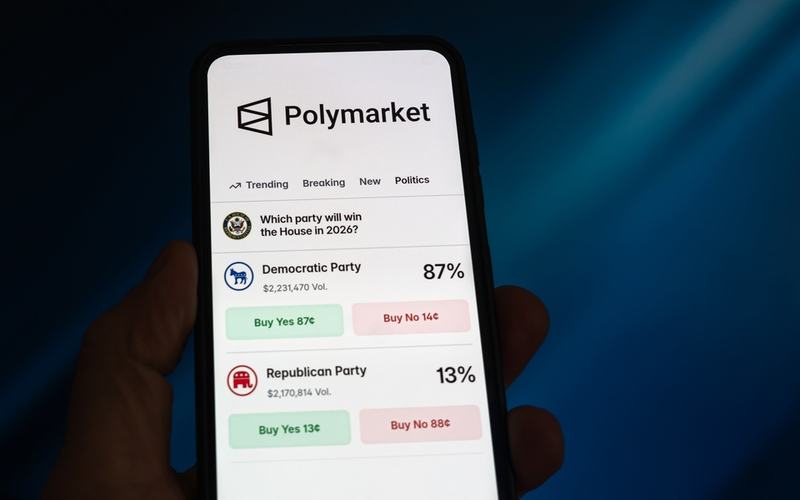
As of Tuesday, Kalshi and Polymarket were each putting the probability of a Democratic takeover of both chambers at approximately 75%. The individual chamber markets were even more favorable to Democrats, with the platforms assigning the party roughly a 94% chance of winning the House and around a 75% to 77% chance of capturing the Senate. More than $1.4 billion had been wagered on the midterm elections across prediction markets, underscoring the growing financial interest in political outcomes.
The results could have consequences beyond the balance of power in Washington. A Democratic sweep would provide a high-profile confirmation of the platforms' forecasts, while Republican victories in either chamber would raise questions about how accurately their market prices reflected the political environment. The companies collect transaction fees regardless of which party wins, but their ability to attract users, investors, and institutional clients depends in part on public confidence in the information their markets produce.
Prediction markets gained widespread attention during the 2024 presidential election, when traders consistently favored Donald Trump over then-Vice President Kamala Harris. That forecast contrasted with several national polls that showed Harris holding a narrow advantage in the final days of the campaign. Trump ultimately won the popular vote by approximately 1.5 percentage points, while the final RealClearPolitics national polling average had shown Harris narrowly ahead by 0.1 points.
The episode fueled debate over the reliability of traditional political polling. Survey organizations have struggled with declining response rates, the disappearance of landline telephone polling, voters screening unfamiliar calls, and the difficulty of assembling representative samples through online and mobile surveys. Identifying which respondents are actually likely to vote has also remained a persistent challenge.
Unlike traditional polls, which ask people about their preferences at a particular moment, prediction markets allow participants to buy and sell contracts tied to specific outcomes. The prices fluctuate as traders respond to polling, campaign developments, news and other information. Supporters argue that the financial incentives encourage participants to seek out useful information and correct inaccurate assumptions. However, market prices are not guarantees, and the people placing trades do not necessarily represent the broader electorate.
Recent elections have highlighted those limitations. Kalshi and Polymarket both heavily favored conservative candidate Flávio Bolsonaro in Brazil's presidential runoff, but incumbent Luiz Inácio Lula da Silva won. In Israel, Polymarket has been examining suspiciously timed trades involving the country's election, while other recent market forecasts have also missed outcomes. Analysts have cautioned that even a market assigning an event a relatively low probability can be correct in the long run, but repeated high-profile misses can damage confidence in its forecasting ability.
The platforms also face political and regulatory scrutiny. Some Democratic lawmakers have expressed concerns about political betting, while the Trump administration has generally taken a more supportive approach toward prediction markets. Their future regulatory environment could depend on ongoing legal challenges and decisions involving the federal government's authority over the industry.
Despite the attention surrounding election contracts, political wagering represents only a portion of the business conducted by the major platforms, with sports-related markets generating substantially more activity. Still, Tuesday's results could carry outsized importance for their public reputation. The forecasts have become a prominent part of election coverage, and the final results will provide a direct comparison between market-implied probabilities and the decisions made by voters.

Comments
No comments yet. Be the first to share your thoughts.