
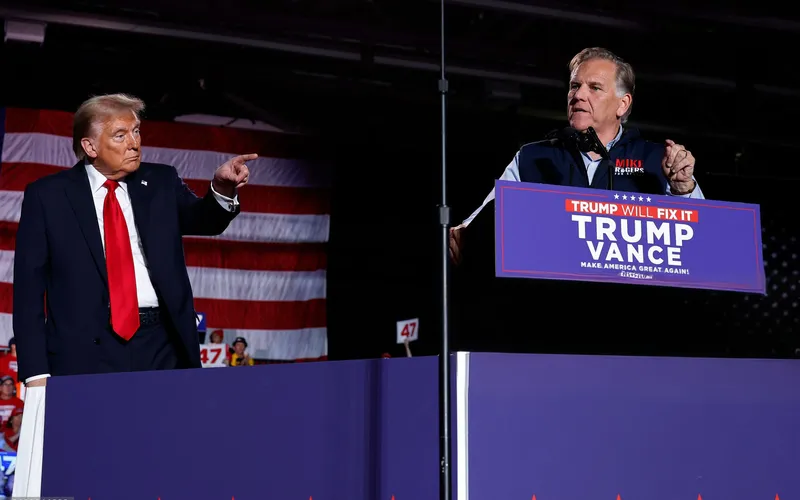
Republican Mike Rogers and Democrat Abdul El-Sayed clashed in their final debate Wednesday night ahead of the tight race for Michigan's open U.S. Senate seat.
The hour-long event at WXYZ-TV studios in Southfield featured pointed exchanges on loyalty to America, economic policy, health care, immigration, and foreign affairs. The contest, one of the most competitive in the country, could help determine control of the Senate after incumbent Democrat Gary Peters retires.
Rogers pressed El-Sayed on national security concerns, asking whether the Democratic nominee was "for America or are you for these terrorist groups overseas." The Republican candidate referenced allegations linking El-Sayed to the Muslim Brotherhood, which the Democrat has denied. El-Sayed called the line of questioning shameful and responded by affirming his pride in America and the Constitution.
El-Sayed repeatedly tied Rogers to President Donald Trump, labeling him a "sock puppet" for Trump policies on trade, energy prices, and the war in Iran. He invited viewers to play "MAGA bingo" during Rogers' responses and criticized the Republican for aligning with what he described as extreme positions that raise costs for Michigan families.
Rogers countered that El-Sayed was trying to distract from his own record and progressive agenda. The Republican highlighted manufacturing challenges, utility and auto insurance costs, and warned that El-Sayed's health care proposals, including Medicare for All, would prove too expensive for taxpayers.
The candidates also differed on immigration enforcement. Rogers supported the Safeguard American Voter Eligibility Act and photo ID requirements for voting. El-Sayed opposed the measure, describing it as voter suppression.
On foreign policy, Rogers emphasized the risks of Iran obtaining nuclear weapons, while El-Sayed accused his opponent of repeatedly pushing for war. Both men made closing appeals to voters, with Rogers warning against El-Sayed's "ideology" and El-Sayed framing the race as a choice between corporate interests and working families.
The debate came less than two weeks before Election Day on November 3. Polls have shown the race within a narrow margin, reflecting its importance in the battle for Senate control.

Comments
No comments yet. Be the first to share your thoughts.