
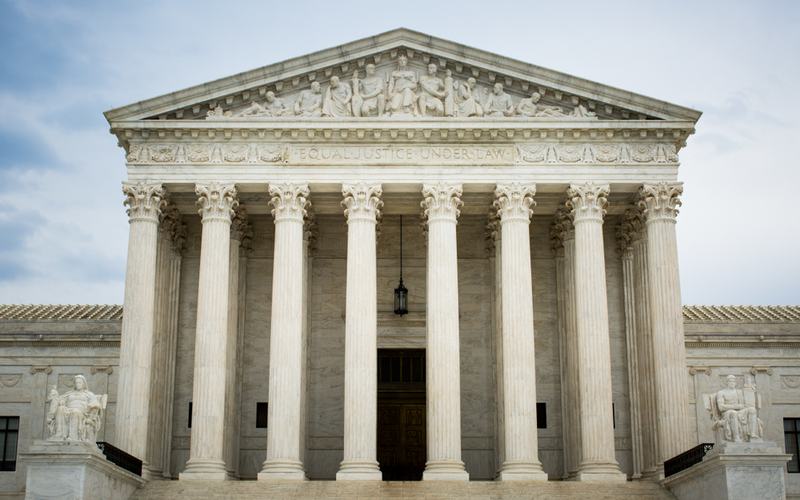
The U.S. Supreme Court on Thursday evening allowed New Hampshire to enforce its law barring the use of student identification cards to vote in the Nov. 3 midterm elections.
In an unsigned order, the justices granted the state's emergency request and stayed a federal district court ruling that had permitted student IDs as fallback evidence for verifying voter identity. The decision restores guidance from Republican Secretary of State David Scanlan that prohibits election officials from accepting school-issued cards under any circumstances.
New Hampshire Gov. Kelly Ayotte signed House Bill 323 into law in April. The measure removed high school and college student IDs from the list of acceptable forms of identification for casting a ballot. Acceptable documents now include driver's licenses from any state, U.S. passports, military IDs, and state-issued non-driver identification cards.
U.S. District Judge Joseph Laplante had issued a preliminary injunction on Oct. 2 that blocked Scanlan's full prohibition on student IDs. Laplante upheld the core of the law but ruled that officials could still consider student cards as one piece of evidence when voters lack primary identification under the state's safety-valve provision.
The First Circuit Court of Appeals upheld the injunction. The state then sought relief from the Supreme Court, which cited the Purcell principle against altering election rules on the eve of voting. Justice Ketanji Brown Jackson dissented.
The ruling came in response to a lawsuit filed by the Coalition for Open Democracy and other groups. Those organizations argued the restrictions burden young voters.
The decision applies to the Nov. 3 election, which includes a contest for an open U.S. Senate seat. The law had already taken effect for the September primary.
Republican officials and the Republican National Committee supported the state's position. The outcome ensures uniform application of the voter identification requirements across polling places.

Comments
No comments yet. Be the first to share your thoughts.