
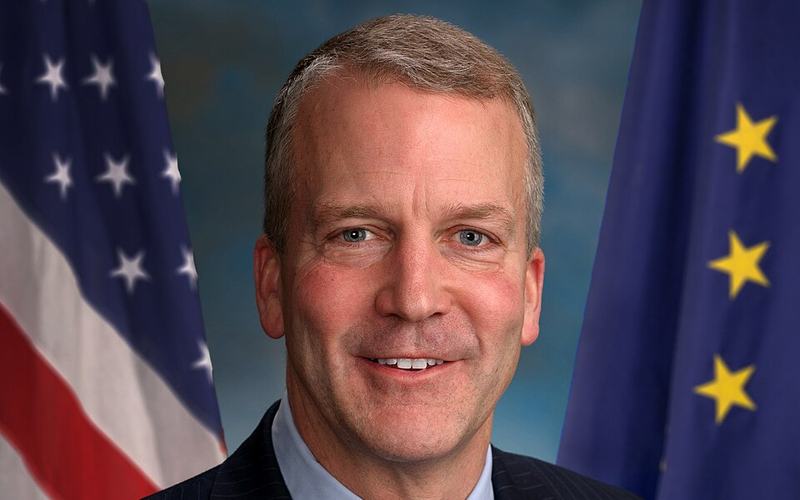
Alaska's closely watched U.S. Senate race took a contentious turn Thursday as incumbent Republican Sen. Dan Sullivan and Democratic challenger Mary Peltola clashed over foreign policy, inflation, domestic energy production, and personal credibility ahead of November's election.
The debate reflected national political tensions surrounding President Donald Trump's handling of the war with Iran and its impact on American consumers. Both candidates acknowledged the need to address the conflict, but they offered sharply different assessments of the administration's approach and the path forward.
Sullivan said the war needed to end soon, emphasizing the importance of reopening the Strait of Hormuz and securing an agreement that prevents Iran from obtaining nuclear weapons. Peltola argued that such an agreement remained far from reach while lamenting the deaths of 20 U.S. military personnel.
"This war is driving up our energy bills and hurting Alaskans with no end in sight," Peltola said.
Sullivan countered that expanding domestic production was the most effective way to ease the financial burden on Alaskans. He argued that the state should produce more of its own energy to help bring down costs for consumers.
"The best way to bring down energy costs is to produce more Alaskan energy by and for Alaskans," Sullivan said.
The candidates also clashed over the war in Ukraine and Trump's reported deal to purchase Russian diesel. Peltola criticized the administration's approach to traditional American allies, arguing that Washington risked strengthening its adversaries while alienating friendly nations.
"I think it's so important that we stand with Ukraine and our allies," Peltola said, adding that the United States had been "making new adversaries out of our traditional allies across the globe."
She argued that the country should be doing everything possible to support Ukraine rather than bolstering Russia. Sullivan said he remained a strong supporter of Ukraine but accused Democrats of undermining American military readiness through cuts to defense spending.
Economic concerns remained central throughout the debate, with Peltola blaming the Trump administration for rising gasoline prices and the broader cost of living. Sullivan warned that Democratic leadership in Congress would threaten military funding and restrict domestic energy development, an especially significant issue in a state whose economy is closely tied to oil and gas production.
The exchange grew increasingly personal as both candidates questioned each other's honesty. Peltola accused Sullivan of misleading voters, saying Alaskans had "had it up to here with the lying and the dishonesty."
Sullivan repeatedly accused Peltola of lying during the campaign and said the alleged conduct revealed problems with her character. The dispute highlighted how personal credibility has become a central issue in a race where both candidates are seeking to convince voters they can best represent Alaska's interests in Washington.
Sullivan also criticized Peltola's record during her time in the House, arguing she had been ineffective. Peltola rejected that assessment, describing their time working together in Alaska's congressional delegation as productive. She pointed to the approval of the Willow oil project in the National Petroleum Reserve-Alaska as an example of their cooperation.
Peltola won special and regular elections for Alaska's sole House seat in 2022 before losing reelection in 2024. She is now attempting to unseat Sullivan, who is seeking a third Senate term.
The debate comes as both parties compete for control of a narrowly divided Senate. President Trump visited the conservative community of Wasilla on Tuesday, while Vice President JD Vance visited Fairbanks the previous week, underscoring the national significance of the Alaska contest.
Alaska last elected a Democrat to the U.S. Senate in 2008, making the race a major test for Democrats seeking to expand their Senate presence in a state that has traditionally favored Republicans in federal elections.
The candidates briefly found common ground when asked about the possibility of a third Trump presidential term. Sullivan said such a move would be unconstitutional, while Peltola noted that the law limits presidents to two terms.
The race also features two other Republicans who advanced through Alaska's open primary system, including retired teacher Dan J. Sullivan, who received approximately 2.5% of the vote in August. The incumbent senator finished second to Peltola in the primary, with the top four candidates advancing to the ranked-choice general election.
With the Iran war, energy prices and the cost of living weighing on voters, Thursday's debate offered both candidates an opportunity to draw a clear contrast. Sullivan emphasized military strength, domestic energy production, and his record in office, while Peltola focused on the administration's foreign policy and the financial pressures facing Alaskans.

Comments
No comments yet. Be the first to share your thoughts.