
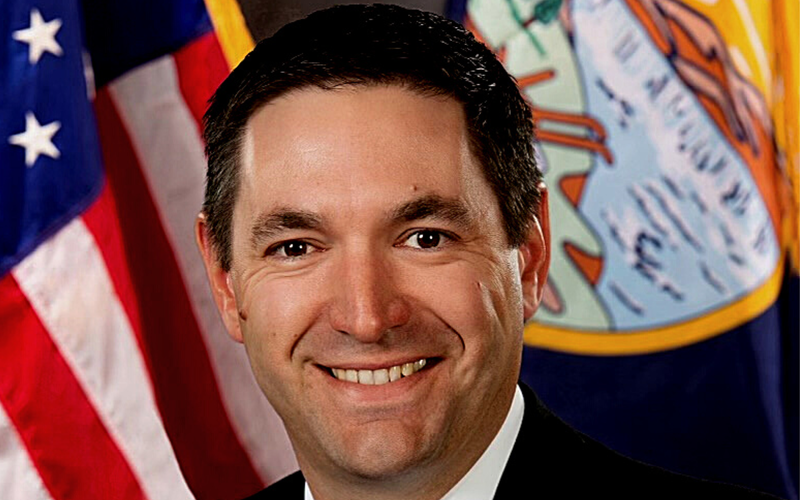
Montana Attorney General Austin Knudsen is leading a coalition of states urging the Supreme Court to take up a challenge to Maine’s 72-hour waiting period for firearm purchases.
Knudsen and attorneys general from 24 other states, along with the Arizona Legislature, filed an amicus brief urging the Supreme Court to hear Beckwith v. Frey, a case challenging Maine’s law.
The coalition includes Montana, Alabama, Alaska, Arkansas, Florida, Georgia, Idaho, Indiana, Iowa, Kansas, Kentucky, Louisiana, Mississippi, Missouri, Nebraska, North Dakota, Ohio, South Carolina, South Dakota, Tennessee, Texas, Utah, West Virginia and Wyoming. The Arizona Legislature is also listed as an amicus in the filing.
Notably, Oklahoma Attorney General Gentner Drummond is not among the attorneys general who signed onto the brief. Drummond is currently serving as Oklahoma’s Attorney General.
The 2024 Maine law requires most firearm purchasers to wait 72 hours before taking possession of a firearm, including buyers who have already passed a background check. The First Circuit Court of Appeals upheld the law, and the case is now before the Supreme Court on a petition for review.
The states argue that the waiting period raises an important Second Amendment question because it delays a law-abiding purchaser from taking possession of a firearm after completing the purchase.
In their brief, the states point to the Supreme Court’s decisions in District of Columbia v. Heller and New York State Rifle & Pistol Association v. Bruen, arguing that the Second Amendment protects the rights of law-abiding citizens and that courts should not treat those rights as subject to a separate and weaker set of standards.
The coalition specifically argues that Maine has not demonstrated that its 72-hour “cooling-off” requirement is consistent with the nation’s historical tradition of firearm regulation, the constitutional test established in Bruen.
The states also point to decisions from lower federal courts involving firearm purchases. They cite the Fifth Circuit’s decision in Reese v. ATF, which recognized that commercial firearm purchases fall within the conduct protected by the Second Amendment.
The brief argues that taking possession of a firearm is an important component of the right to keep and bear arms. The states contend that forcing a purchaser to wait before taking possession therefore constitutes a restriction on that right.
The coalition also argues that the Supreme Court should provide greater guidance to lower courts on how the Second Amendment applies to firearm acquisition. The states say the question is particularly important because several states have adopted waiting periods following the Supreme Court’s Bruen decision.
Maine’s law contains several exceptions, including certain purchases involving law-enforcement officers, licensed firearms dealers, family members and antique firearms. The law also imposes civil and criminal penalties for violations.
The case presents a split among federal appeals courts. The First Circuit upheld Maine’s waiting-period law, while the Tenth Circuit reached a different conclusion regarding a similar New Mexico law, according to the petition filed with the Supreme Court.
Knudsen’s coalition argues that the Supreme Court should resolve the disagreement and clarify whether states may impose mandatory waiting periods on purchasers who have already satisfied the applicable background-check requirements.
The Supreme Court has not yet announced whether it will hear Beckwith v. Frey. The petition asks the justices to determine whether requiring otherwise law-abiding citizens to wait three days before taking possession of a firearm violates the Second Amendment.

Comments
No comments yet. Be the first to share your thoughts.