
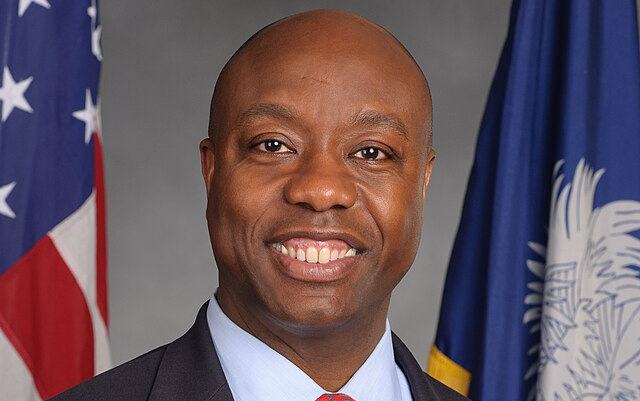
Sen. Tim Scott, R-S.C., delivered a blunt message to Senate Republicans Wednesday as the party prepares for the final stretch of the 2026 midterm campaign: treat the election as a fight for every seat.
During a closed-door meeting, Scott allegedly told Republican senators they were “in the fight for our lives with a record number of toss-up races,” according to people familiar with his remarks. He argued that Republicans still have a path to maintaining control of the chamber despite the increasingly competitive map.
Republicans currently hold 53 Senate seats to Democrats’ 47, meaning Democrats would need a net gain of four seats to take the majority. Scott pointed to the 2022 midterms as an example of how a party can outperform the broader political environment. Democrats gained a Senate seat that year even as Republicans won control of the House.
The NRSC chairman said internal polling from Peak Insights showed Republican standing on the generic congressional ballot improving and GOP voter enthusiasm increasing by 20% over the past two months. He also urged senators running in heavily Republican states to campaign as though they were behind.
The breadth of the Senate battlefield is forcing Republicans to defend seats in states that normally would not receive the same level of national attention. Scott specifically identified GOP-held contests in Maine, Iowa, Ohio, Texas and Alaska, while highlighting Democratic-held seats in New Hampshire and Michigan as potential Republican targets.
The Cook Political Report listed seven Senate contests as toss-ups on Wednesday: Alaska, Iowa, Maine, Michigan, New Hampshire, Ohio and Texas. The ratings reflect competitiveness rather than a prediction of which party will win.
Campaign spending is also becoming a major factor. Democratic Senate candidates are scheduled to spend about $32.8 million on television advertising during September across six key states, compared with roughly $2.3 million from Republican candidates themselves. Republican committees, however, plan to add another $29.3 million through coordinated spending, substantially narrowing the difference in television investment.
Republicans are using recent Supreme Court rulings that loosened restrictions on coordinated spending between candidates and political committees to stretch their campaign resources. The NRSC reported spending $46.5 million through coordinated efforts in Senate races during August, according to Axios as cited by Semafor.
Scott also told colleagues that Republican polling showed the North Carolina Senate race tightening, while Minnesota remained competitive. The NRSC has been weighing how heavily to continue investing in some contests as it balances offensive opportunities against the need to protect Republican-held seats.
The final weeks of the campaign will therefore require Republicans to divide their resources across a much larger battlefield than the party initially anticipated. Scott’s message to senators was straightforward: even candidates in traditionally safe states should campaign as if the race is close.

Comments
No comments yet. Be the first to share your thoughts.