
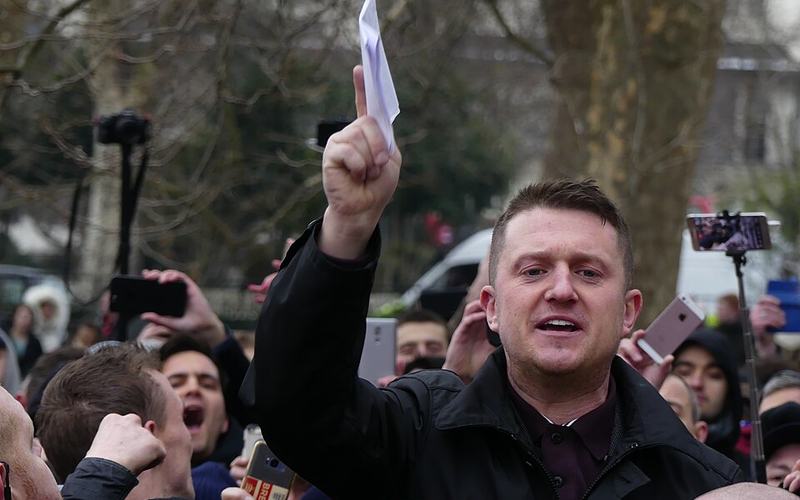
British activist Tommy Robinson, whose legal name is Stephen Yaxley-Lennon, was found guilty Wednesday of two counts of harassment causing fear of violence against two journalists associated with the Daily Mail.
A jury at Southwark Crown Court returned majority verdicts after deliberating for 11 hours and 25 minutes, according to GB News. Robinson sat quietly and shook his head as the verdicts were announced, while supporters in the public gallery could be heard sighing.
The charges involved freelance reporter Andrew Young and Daily Mail editor Jacob Dirnhuber. Prosecutors said Robinson targeted the two men through social media posts and telephone communications after the newspaper published articles in August 2024 showing him vacationing in Cyprus while riots followed the murders of three young girls in Southport, England.
The reporting accused Robinson of “stoking riots from his sunbed,” according to Sky News. Prosecutors argued that his response went beyond criticism of the coverage and became a campaign of harassment that caused the journalists to fear violence.
Frank Ferguson, head of the Crown Prosecution Service’s Special Crime and Counter Terrorism Division, said Robinson had used social media to target the journalists directly and indirectly. Prosecutors also cited the publication of images relating to the reporters and their families.
“Stephen Lennon weaponised social media and subjected two journalists to a campaign of harassment which caused them serious fear of violence,” Ferguson said.
He added that journalists should be able to carry out their professional duties without being subjected to harassment.
The conviction has drawn criticism from Robinson’s supporters, who argue that the case raises questions about free speech, press conduct and the treatment of the activist by British authorities.
British Member of Parliament Rupert Lowe criticized the outcome in a post on X, writing, “We live in dark times.”
Podcaster and commentator Gavin McInnes also questioned the circumstances surrounding the dispute, pointing to reports that the journalists had published the location of the Cyprus hotel where Robinson was staying with his family. McInnes noted that Robinson had previously received death threats serious enough to prompt police warnings at his home.
Robinson had made clear that he could respond after his family’s whereabouts were publicized, according to commentary surrounding the case. However, the jury found him guilty of the two harassment offenses, and the conviction does not itself establish that the journalists committed a criminal offense by publishing the location.
The case has renewed debate among Robinson’s supporters over whether British harassment laws are being applied in a way that could discourage forceful criticism of journalists. The prosecution, meanwhile, maintained that the conduct established in court amounted to targeted harassment that caused fear of violence.
Robinson has previously faced convictions involving offenses connected to journalists. He remains free on bail pending sentencing.
He is scheduled to be sentenced on December 16 and faces a maximum of 10 years in prison on the two harassment counts. The actual sentence will be determined by the court.

Comments
No comments yet. Be the first to share your thoughts.