
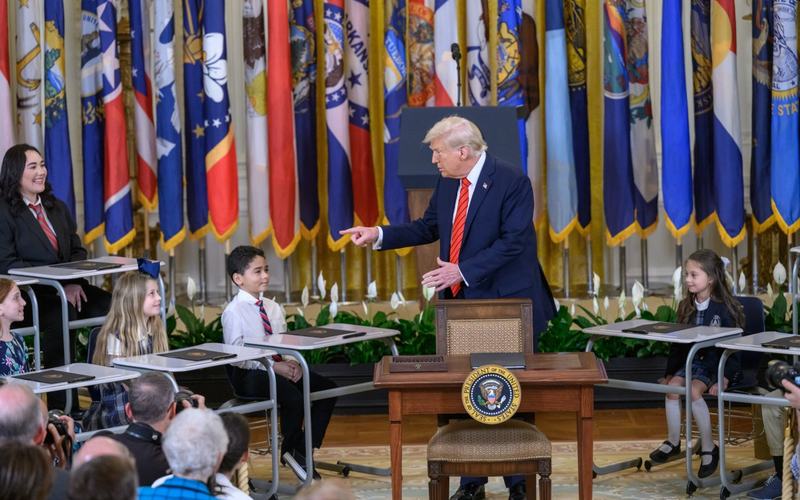
The Trump administration moved forward with its school choice priorities on Thursday when the Treasury Department and Internal Revenue Service released proposed regulations for the Education Freedom Tax Credit.
The rules detail how taxpayers may claim a dollar-for-dollar federal income tax credit of up to $1,700 for contributions to Scholarship Granting Organizations, or up to $3,400 for married couples filing jointly. Those organizations will distribute the donations as K-12 scholarships for tuition, books, supplies, tutoring, and other qualified expenses at public, private, or homeschool settings.
The program, enacted last year in Republican tax legislation, is set to begin January 1, 2027. It marks the first nationwide federal tax credit focused on private donations for elementary and secondary school scholarships.
Treasury Secretary Scott Bessent stated that the regulations support expanded educational freedom and greater parental control over schooling decisions. The proposed rules also contain temporary provisions to assist states and organizations in preparing for the launch.
By 2030, Treasury and the IRS project the program could engage 600 to 700 Scholarship Granting Organizations, draw nearly $26 billion in annual contributions from more than 11 million taxpayers, and support as many as 2.2 million scholarships each year.
Dozens of states have already joined the program, permitting their residents and donors to participate. The rules clarify eligibility, with approximately 96 percent of children in participating states expected to qualify under the proposed safe harbors.
The initiative builds on the administration's efforts to promote parental rights in education and reduce federal involvement in schooling choices. Officials estimate it will give families more flexibility than traditional public school funding models.
Democratic lawmakers have raised objections to the program's implementation, citing concerns over its structure and effects on public education funding. The proposed regulations remain open for public comment as agencies finalize details before the 2027 effective date.

Comments
No comments yet. Be the first to share your thoughts.