
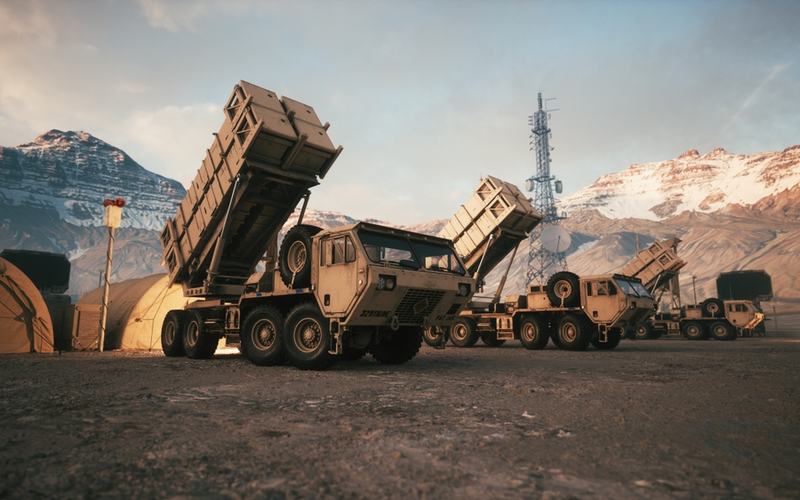
The U.S. State Department announced Friday that the Trump administration has approved the sale of 500 Patriot PAC-3 missile interceptors to Ukraine in a deal valued at approximately $2.1 billion.
Ukraine will finance the purchase through contributions from Canada, Germany and Norway, routed through the U.S. JUMPSTART program, as well as national funds supported by the European Union's Ukraine Support Loan, according to the State Department. Lockheed Martin will serve as the principal contractor.
The approval comes after Ukrainian officials raised concerns about delays in receiving critical American air-defense missiles. Ukrainian President Volodymyr Zelenskyy said earlier this week that Kyiv had been waiting nearly a month for Washington to approve essential missile supplies as Russia intensified attacks on Ukraine's energy and civilian infrastructure.
Zelenskyy has repeatedly urged the United States to accelerate weapons deliveries ahead of winter. NATO allies have been purchasing American-made missiles for Ukraine through the Prioritized Ukraine Requirements List, or PURL, program.
The delays have also added to tensions between Washington and Kyiv. President Donald Trump recently announced a diesel deal with Russia and criticized Zelenskyy over Ukraine's continued attacks on Russian oil refineries.
The latest agreement comes as the United States works to replenish and expand its supply of advanced munitions. American forces have used significant quantities of weapons in military operations against Iran while the United States continues supplying arms to allies, raising concerns about inventories of air-defense interceptors and precision-guided weapons.
In July, the U.S. Army awarded Lockheed Martin a contract valued at up to $58.6 billion to manufacture Patriot interceptor missiles. The company said the agreement would support its plan to triple production capacity for the PAC-3 Missile Segment Enhancement variant by the end of 2030.
Lockheed has also announced plans to increase annual Patriot PAC-3 interceptor production to 2,000 missiles. Its expansion plans include increasing employment at its Camden, Arkansas, facility by 50%, from approximately 1,200 workers to 1,850.
Meanwhile, Pentagon negotiators are pressing defense contractors to accelerate weapons production. Tentative production agreements reached earlier this year are part of a broader effort to increase output and address concerns about the availability of critical munitions.

Comments
No comments yet. Be the first to share your thoughts.