
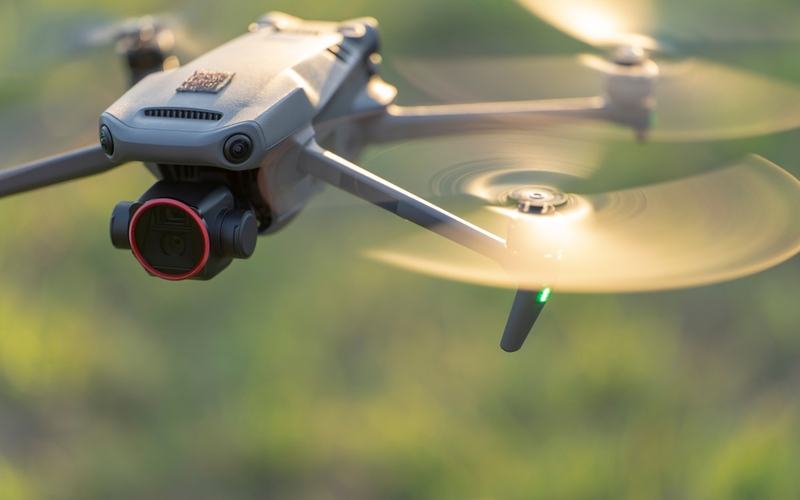
The Trump administration implemented tariffs of up to 100 percent on certain imported drones and related components on Thursday, September 3, 2026. The measures target larger drones, those equipped with thermal imaging, docking stations, and specific critical parts, primarily to reduce U.S. dependence on Chinese suppliers.
President Donald Trump signed the proclamation on August 13 under Section 232 of the Trade Expansion Act of 1962. It followed a Commerce Department investigation that identified reliance on foreign unmanned aircraft systems as a national security threat. The White House cited risks including potential disruption of supply chains and cybersecurity vulnerabilities.
Drones with a maximum takeoff weight exceeding 25 kilograms, or about 55 pounds, along with models featuring thermal imagers and their docking stations, face the full 100 percent tariff. Smaller drones weighing 25 kilograms or less are subject to a 25 percent duty. Certain less sensitive components will incur a 25 percent tariff starting February 9, 2027.
Products from the European Union, Japan, South Korea, Taiwan, Switzerland, and Liechtenstein qualify for a maximum 15 percent rate. British-origin items face a 10 percent ceiling. These reduced rates require certification that substantially all hardware, software, and technology originate from the United States or the listed allied nations.
The policy aims to bolster domestic drone manufacturing and supply chains. One Chinese firm, Shenzhen-based DJI, accounts for more than 70 percent of the global commercial drone market. The tariffs apply to the vast majority of foreign drones used by law enforcement for tasks such as wildfire tracking and search operations.
Allied nations receive preferential treatment compared to other foreign producers, though they do not escape duties entirely. The administration has also authorized programs to encourage companies to onshore production in the United States.

Comments
No comments yet. Be the first to share your thoughts.