
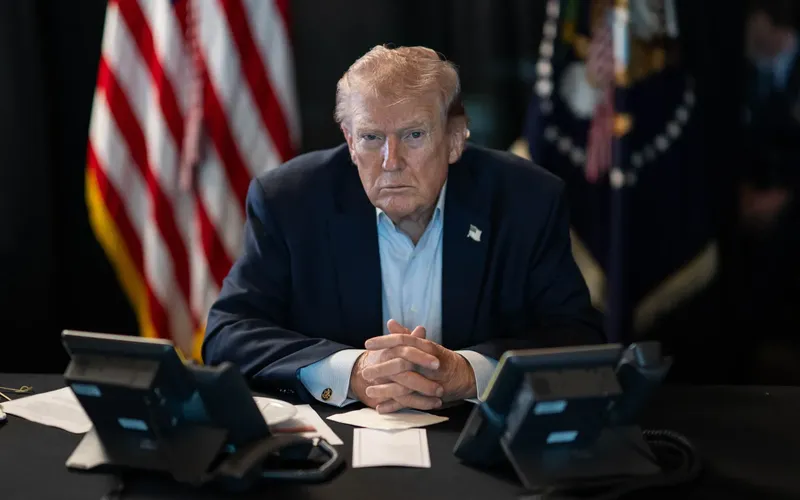
President Donald Trump reversed course on Sunday Night and declined to order U.S. airstrikes against Houthi targets in Yemen despite repeated appeals from Saudi Crown Prince Mohammed bin Salman.
The decision came after U.S. military commanders had approved target lists and begun loading bombs onto aircraft in preparation for possible strikes. Trump had wavered for nearly two weeks amid escalating Houthi advances along Yemen's Red Sea coast and renewed attacks on Saudi territory, including a ballistic missile strike aimed at Riyadh.
Saudi officials reported that Houthi forces seized key ports such as Mokha and pushed toward the Bab al-Mandeb strait, threatening shipping lanes. The Iran-backed group also claimed drone and missile strikes on sensitive sites in the Saudi capital and an Aramco facility in Yanbu. Saudi forces intercepted several projectiles and conducted airstrikes in response.
Trump cited assurances from Houthi representatives that the group would not target U.S. interests or shipping, limiting its focus to Saudi vessels. The president has sought to avoid opening a new front while U.S. forces remain engaged in operations against Iran.
Instead of direct strikes, the administration has provided increased intelligence support and approved the sale of up to 48 F-35 fighter jets to Saudi Arabia. U.S. Central Command has also augmented personnel at its operations center in the kingdom to assist with targeting.
The choice leaves Saudi Arabia to confront the Houthis largely on its own at a time when Riyadh faces pressure on multiple fronts. The kingdom has explored additional security partnerships with nations including Turkey and Pakistan.
Trump administration officials emphasized the need to prioritize resources amid the broader conflict with Iran. The episode underscores the delicate balance between supporting key allies and avoiding deeper U.S. entanglement in regional proxy wars.

Comments
No comments yet. Be the first to share your thoughts.