
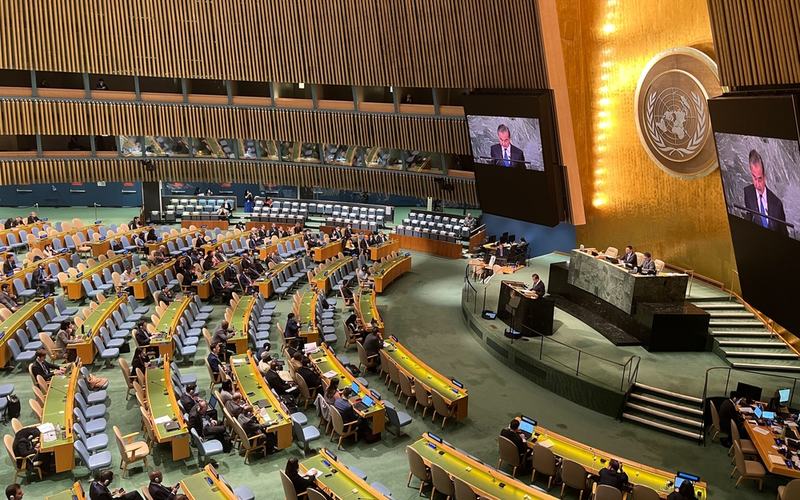
The United Nations Framework Convention on Climate Change issued its 2026 Nationally Determined Contributions Synthesis Report on Tuesday, concluding that existing pledges from 154 countries would reduce global greenhouse gas emissions by just 6 percent below 2019 levels by 2035.
Even if all unconditional and conditional targets were fully met, the projected cut reaches only 9 percent, according to the analysis of submissions received between January 2024 and August 2026. Those plans cover 71 percent of global emissions.
This marks a downward revision from last year's UN estimate of a 10 percent reduction, a shift attributed in part to additional pledges incorporated into the models and the United States' second withdrawal from the Paris Agreement under President Donald Trump.
The report notes that full implementation alongside countries' longer-term net-zero goals, mostly targeted for 2050, would result in estimated warming of 1.7 to 2.3 degrees Celsius by the end of the century. It states that returning to a 1.5-degree limit would require substantial additional reductions beyond current plans.
UN climate chief Simon Stiell said the upcoming COP31 meeting in Turkey could help address implementation gaps through practical measures. The findings arrive weeks before that conference and follow a separate UN Environment Programme assessment that described the 1.5-degree goal as out of reach.
The modest projected declines highlight persistent challenges in translating international commitments into measurable outcomes, particularly as major economies balance emissions goals with energy security and economic growth priorities. Developing nations continue to emphasize the need for financial support to meet any targets, while the U.S. exit underscores differing national approaches to climate policy.

Comments
No comments yet. Be the first to share your thoughts.