
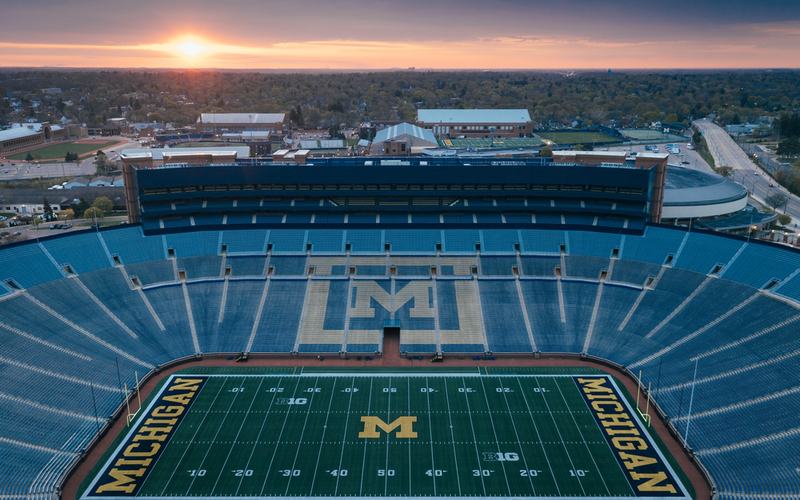
The Big Ten Conference's explanation for restoring one second to the game clock during Michigan's 13-12 victory over Western Michigan has highlighted a long-standing issue in college football timing that echoes complaints about soccer's extra time.
In the closing moments of Saturday's game, Western Michigan appeared to have secured a major upset when Michigan's final Hail Mary fell incomplete as the clock hit zero. Officials reviewed the play and determined that a Western Michigan defender had touched the ball while out of bounds with one second remaining, stopping the clock and allowing Michigan quarterback Bryce Underwood one more attempt. He connected on a touchdown pass to win the game.
The Big Ten released a statement citing NCAA rule 4-2-3-a, which states a loose ball becomes out of bounds upon touching anything outside the boundary line. The conference noted that replay officials used a direct camera feed of the stadium clock synced with broadcast cameras 85 minutes before kickoff via a strobe system. This internal clock showed contact with one second left, even as the NBC broadcast clock reached zero.
Western Michigan president Russ Kavalhuna confirmed the conference cited a known discrepancy between the replay system and television feed, with the TV clock running slightly fast. The Mid-American Conference accepted the explanation after receiving video and audio from the review.
Critics, including analysts and former officials, questioned the transparency of relying on a clock not visible to viewers or the on-field officials in real time. NBC rules analyst Terry McAulay stated on air that the ball remained in the air when the broadcast clock hit zero.
This incident revives comparisons to soccer, where match officials maintain an invisible running clock for added time that often diverges from the stadium display. College football's use of conference-appointed timers and replay systems creates similar opacity around precise timing at critical moments.
The Big Ten maintained that its process follows standard replay protocols applied throughout games. No appeals are available under conference or NCAA rules for such timing decisions.

Comments
No comments yet. Be the first to share your thoughts.