
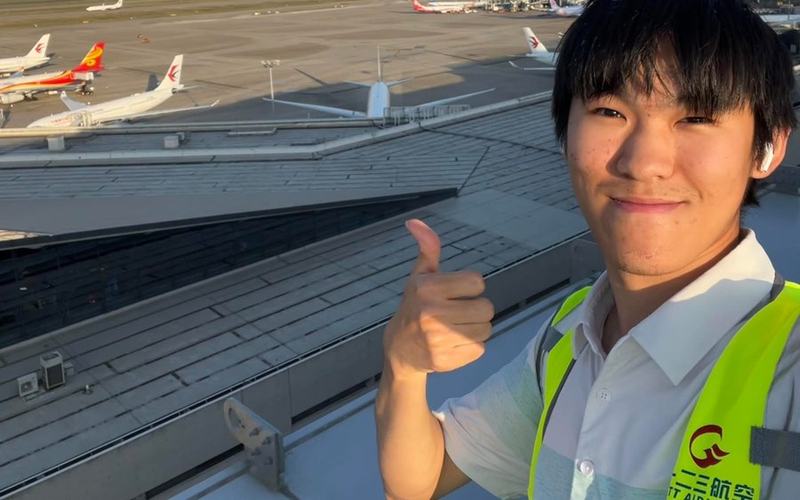
A 21-year-old college student from China has been charged by federal authorities after allegedly photographing U.S. military aircraft at a secured installation in Nebraska during a cross-country trip.
According to an FBI affidavit, Tianrui Liang was arrested on April 7 at a New York airport while attempting to depart the United States for Glasgow, Scotland, where he is enrolled in school. Investigators allege Liang took unauthorized photos in late March while stopped on a public roadway near Offutt Air Force Base, located outside Omaha.
Authorities say Liang admitted to photographing two aircraft: the RC-135 reconnaissance plane and the E-4B, a specialized aircraft known as the “Nightwatch.” The E-4B serves as a mobile command center capable of supporting the president and senior military officials during national emergencies.
The FBI stated that photographing or sketching designated defense installations without authorization is prohibited under federal law. While images of such aircraft may be publicly available, officials emphasized that capturing photos at or near military bases without permission remains restricted.
According to court documents, Liang told investigators he believed it was permissible to take pictures of the sky but acknowledged that photographing planes on the ground was illegal. He said the images were intended for personal use.
The affidavit also outlines Liang’s travel route, stating he entered North America through Vancouver, Canada, on March 26, before crossing into the United States in Washington state. He later drove to South Dakota to view Ellsworth Air Force Base and had expressed interest in visiting Tinker Air Force Base.
Liang has not yet appeared in federal court in Omaha. His attorney declined to comment on the charges.
The case follows several recent incidents involving foreign nationals accused of accessing or documenting U.S. military sites. In prior cases, individuals have faced charges related to photographing restricted areas or providing false statements to investigators after being confronted near defense installations.
Federal authorities have not indicated whether Liang’s actions were connected to any broader effort, but the case adds to ongoing concerns about security and surveillance risks involving sensitive military infrastructure.

Comments
No comments yet. Be the first to share your thoughts.