
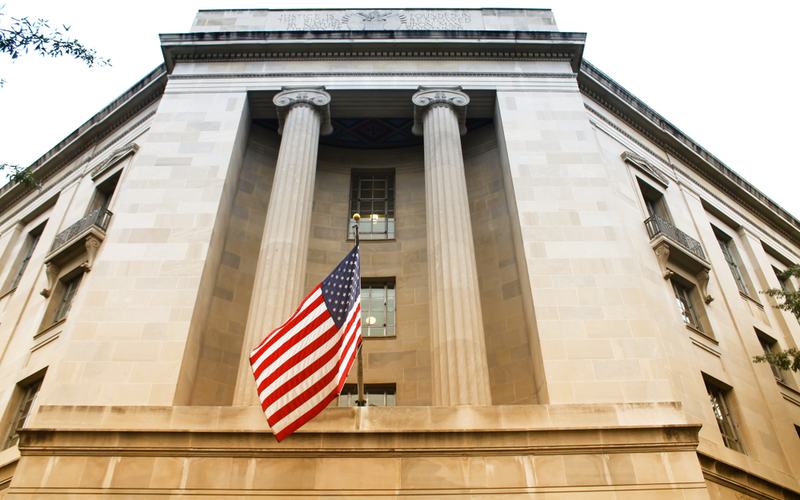
The U.S. Department of Justice filed a federal lawsuit Tuesday against the City and County of Denver and the Denver Police Department, challenging the city's longstanding ban on so-called assault weapons as a violation of the Second Amendment.
The suit targets Denver Revised Municipal Code Section 38-121(c), which has prohibited the possession, sale, manufacture or transfer of "assault weapons" since 1989. The ordinance defines assault weapons to include semiautomatic rifles and pistols with magazines holding more than 15 rounds, semiautomatic shotguns with folding stocks or magazines exceeding six rounds, and conversion kits. Federal attorneys argue the ban covers AR-15-style rifles, which they describe as America's most popular rifle and owned by 16 million to 24.6 million law-abiding Americans for self-defense and other lawful uses.
"The Constitution is not a suggestion and the Second Amendment is not a second-class right," Acting Attorney General Todd Blanche said in a statement. "Denver's ban on commonly owned semi-automatic rifles directly violates the right to bear arms. This Department of Justice will vigorously defend the liberties of law-abiding citizens nationwide."
Assistant Attorney General for the Civil Rights Division Harmeet K. Dhillon added that her division's new Second Amendment Section aims to protect Americans from such restrictions. "Law-abiding Americans, regardless of what city or state they reside in, should not have to live under threat of criminal sanction just for exercising their Second Amendment right to possess arms which are owned by tens of millions of their fellow citizens," she said.
The complaint invokes Supreme Court precedents including District of Columbia v. Heller (2008), which protected arms in common use for lawful purposes; New York State Rifle & Pistol Association v. Bruen (2022), establishing a history-and-tradition test for gun laws; and recent cases like Smith & Wesson Brands v. Estados Unidos Mexicanos (2025), affirming the AR-15's popularity. It also alleges a pattern or practice of rights deprivation by Denver law enforcement under 34 U.S.C. § 12601 and seeks a declaration of unconstitutionality, a permanent injunction against enforcement and remedial policies.
The action followed a DOJ demand letter sent April 28 to Mayor Mike Johnston and Police Chief Ron Thomas, giving until Tuesday to repeal the ban or face suit. Denver rejected the demand in a May 4 response, calling it "baseless, irresponsible and a clear overreach." City leaders held a news conference that day to affirm the ordinance's value.
"Our answer is hell no," Johnston said. "No, we will not roll back a common-sense policy that has kept weapons of war off of these city streets for 37 years." He credited the ban with contributing to Denver's recent safety gains, including the sharpest homicide drop among large U.S. cities, lower violent crime and higher police trust.
Denver officials cited post-Bruen appellate rulings upholding similar bans in six circuits and a 2025 Tenth Circuit decision rejecting ownership numbers as dispositive. They noted a 2024 dismissal of a Colorado large-capacity magazine challenge.
The ban originated in 1989 amid a metro area crime surge, predating mass shootings like Columbine (1999), Aurora (2012) and Boulder (2021). The DOJ has pursued similar challenges, including a December 2025 suit against Washington, D.C.
A separate DOJ letter demanded Colorado repeal its large-capacity magazine ban, but no state suit has been filed. The case, filed in U.S. District Court in Colorado, marks an early test of the Trump administration's push to roll back local gun restrictions.

Comments
No comments yet. Be the first to share your thoughts.