
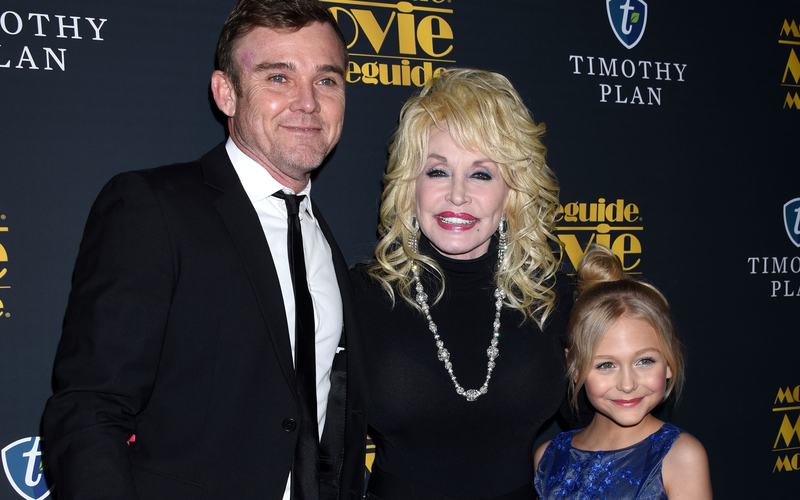
For millions of Americans, today is a day off from the “9 to 5.” Labor Day celebrates the contributions of American workers, making it perhaps fitting that one of the songs most synonymous with the daily grind came from Dolly Parton herself. Her 1980 hit “9 to 5” captured the frustrations and aspirations of working Americans and became one of the defining songs of her career. But Dolly’s ability to connect with people extended far beyond the workplace and her music.
Here on the Hollywood Walk of Fame, Dolly Parton’s star was restored Friday after it was vandalized following her death, an act that shocked many of her fans. Someone may have been able to temporarily damage the concrete star commemorating Dolly’s remarkable career, but they could never damage what made Dolly Parton such a rare figure in American culture: her ability to bring people together.
Throughout her career, Parton made a conscious effort to stay out of partisan politics and avoid alienating her fans. Her nephew, Bryan Seaver, has used the term “Dollitics” to describe that approach. But staying out of partisan politics certainly didn't mean Dolly was apathetic.
In 2020, she donated $1 million to Vanderbilt University Medical Center to support COVID-19 research. Two years later, she donated another $1 million to support pediatric infectious disease research. And through decades in the public eye, Dolly maintained something increasingly difficult to find in American public life: broad appeal across political and cultural divides.
Dolly was once asked if she would ever run for political office. Her response was, well, very Dolly: “I think of myself more as a diplomat.”
There is a broader idea behind that philosophy: neutrality doesn't necessarily mean disengagement. Switzerland, for example, has spent generations pairing political neutrality with active diplomacy, using its position to facilitate dialogue even among countries and groups that profoundly disagree.
So what, if anything, can “Dollitics” teach American politicians about communicating in an increasingly divided country? That's a question we're taking from Hollywood to Dallas this week, where Republicans are trying something that hasn't been done before: holding a national midterm gathering to build momentum for their candidates as control of Congress hangs in the balance this November.
A UMass Lowell/YouGov poll conducted earlier this year found Dolly Parton with a 70% favorability rating. But the more remarkable numbers may be what happens when you break that down by politics. 78% of Democrats viewed her favorably. So did 73% of Republicans.
Now compare that with some of the biggest names in American politics. Former President Barack Obama registered 50% favorable nationally. Former President George W. Bush was at 37%. President Donald Trump, 36%. Vice President JD Vance and former Vice President Kamala Harris both came in at 35%. And former President Joe Biden, 32%.
But when we turn from the White House to Capitol Hill, the poll reveals something else that's particularly interesting heading into a convention focused on the midterms: name recognition. Senator Bernie Sanders registered 39% favorable, and Representative Alexandria Ocasio-Cortez, 29%. House Speaker Mike Johnson registered 19% favorable, with nearly one in four Americans surveyed saying they had never heard of him. Senate Majority Leader John Thune registered 11% favorable, while 39% said they had never heard of him.
On the Democratic side, Senator Chris Murphy registered 10% favorable, while nearly half of those surveyed, 49%, said they had never heard of him. The contrast with Dolly is striking. She wasn't just popular, she was widely known. Only 6% of those surveyed said they had never heard of her.
That's an important distinction. Those lower favorability numbers don't necessarily mean Americans view those congressional leaders unfavorably. In many cases, Americans don't have an opinion of them, because they don't know who they are.
And that's what makes the contrast with Dolly Parton so striking: 70% favorable, just 5% unfavorable, and only 6% said they had never heard of her. Even more remarkable, that favorability crossed party lines, with broad support among both Democrats and Republicans.
That isn't a comparison of political records or policies. Instead, the poll highlights two different challenges for political figures: being known by the country in the first place, and then building appeal beyond the people who already agree with you.
And that brings us to Dallas. Political conventions are, in part, exercises in communication: generating attention, energizing voters, showcasing candidates and making a party's case to the country. So when we arrive in Dallas, one of the questions I'll be asking isn't simply what Republicans are saying from the stage. It's whether they can do what Dolly Parton managed for decades: reach beyond the people already listening and connect with Americans who may not agree with them.

Comments
No comments yet. Be the first to share your thoughts.