
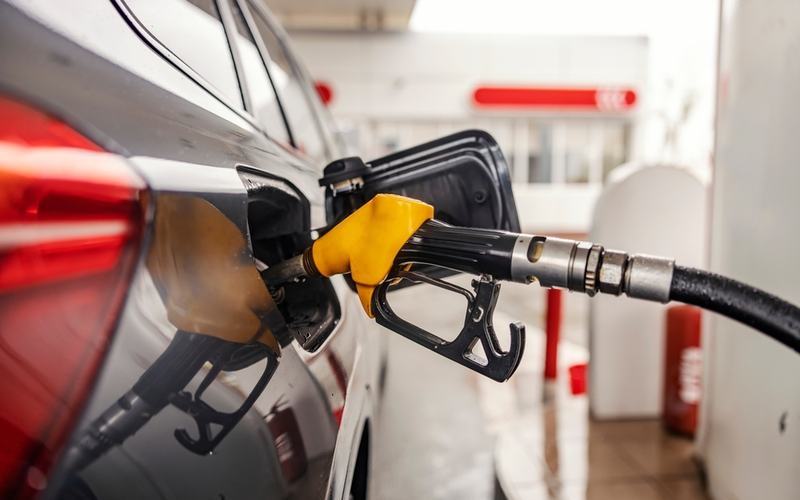
U.S. gasoline prices climbed to a national average of $4.18 per gallon for regular on Tuesday, marking the highest level in four years. The AAA motor club reported the figure, which exceeds levels last seen in April 2022, shortly after Russia invaded Ukraine.
The surge stems from ongoing disruptions in the Strait of Hormuz, where negotiations between the United States and Iran have reached a deadlock. The strait, through which about 20% of the world's oil passes, has seen shipping traffic at a standstill since late February, when U.S. and Israeli strikes targeted Iran, prompting Iranian retaliation and a U.S. naval blockade of Iranian ports. Iran has seized vessels accused of violations in the area, further complicating maritime flows.
U.S. Secretary of State Marco Rubio highlighted Iran's nuclear program as the core issue blocking progress. "That fundamental issue still has to be confronted," Rubio said. "We can't let them get away with it." Iran proposed reopening the strait in exchange for the U.S. lifting its blockade, but talks have not advanced, with Iran's leadership described as deeply fractured. President Trump stated that Iranian leaders informed him the country is in a "state of collapse" and seeks to open the Strait soon.
Oil benchmarks reflected the tensions, with Brent crude rising above $105 a barrel for July delivery, up more than 40% since the strikes began, and West Texas Intermediate nearing $101. Diesel prices stood at $5.46 per gallon, a 45% increase since the war's onset. Gasoline costs have risen 40% over the same period.
State-level prices varied widely. Hawaii led at $5.641 per gallon, followed by the District of Columbia at $4.303, Connecticut at $4.247, Vermont at $4.158, and New Jersey at $4.152. The national average stands at $4.176 per AAA's latest data, up from $3.976 a month ago and $3.150 a year ago, though down slightly from $4.22 peaks earlier in April.
The conflict has fueled inflation concerns. Consumer prices jumped 0.9% in March, the largest monthly gain in nearly four years, driven partly by energy costs. Global impacts include higher living costs, with nations like Australia facing acute pressure as 80% of their oil transits the Strait.
BP reported doubled first-quarter profits from exceptional oil trading amid the disruptions. Despite stock market resilience, analysts monitor the Strait closely for further escalations.

Comments
No comments yet. Be the first to share your thoughts.