
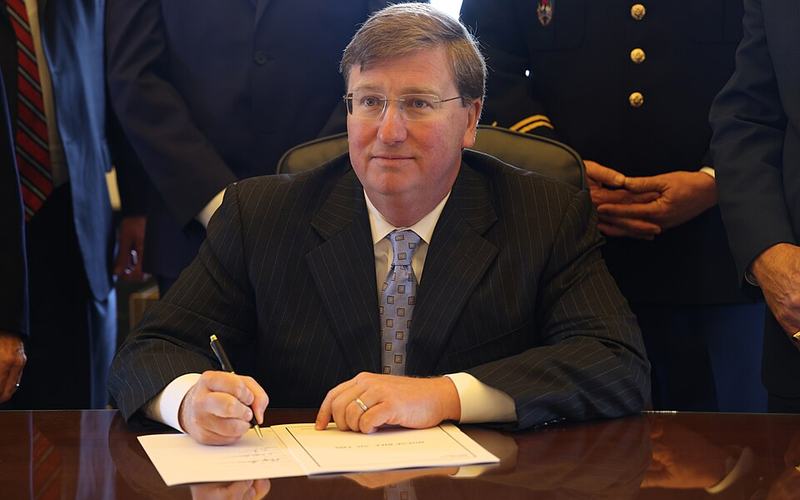
Mississippi Gov. Tate Reeves announced Friday that he will call the state Legislature into a special session to redraw the three electoral districts for the Mississippi Supreme Court.
The session is set to begin 21 days after the U.S. Supreme Court issues its ruling in Louisiana v. Callais, a case examining whether race-based considerations in redistricting violate the Constitution. Reeves signed the proclamation on Thursday, arguing that the pending Supreme Court decision has prevented lawmakers from having a fair opportunity to address a federal court order on the districts.
In a social media post, Reeves stated, "It is my belief and federal law requires that the Mississippi Legislature be given the first opportunity to draw these maps." He added that he hopes the Supreme Court in Callais "will reaffirm the animating principle that all Americans are created equal" and reject government classifications based on race.
The announcement comes amid ongoing litigation over the Supreme Court districts, which have not been redrawn since 1987. In 2022, the ACLU of Mississippi, Southern Poverty Law Center, and others sued on behalf of Black voters, claiming the Central District map dilutes their voting power in violation of Section 2 of the Voting Rights Act.
U.S. District Judge Sharion Aycock ruled last year that the Central District, which covers majority-Black areas including the Delta and Jackson metro, does not give Black voters an equal opportunity to elect preferred candidates. The district elects three of the court's nine justices, currently held by two white justices and one Black justice. No Black person has been elected to the court from the Northern or Southern districts without a prior interim appointment by the governor.
Aycock barred the use of the current map in future elections and directed the Legislature to propose new boundaries. Lawmakers declined to act during the 2026 session, believing the ruling was incorrect, and appealed to the 5th U.S. Circuit Court of Appeals. The appeals court paused proceedings pending the Supreme Court's decision in Callais.
Louisiana v. Callais challenges the state's 2024 congressional map, which includes a second majority-Black district ordered by a lower court under the Voting Rights Act. Challengers argue it constitutes an unconstitutional racial gerrymander. Oral arguments occurred in October 2025, and a ruling could clarify limits on race in redistricting nationwide, potentially affecting states like Mississippi.
Reeves emphasized his constitutional authority to convene the session, allowing lawmakers to respond once the high court provides clarity. Meanwhile, civil rights groups have submitted redraw proposals to Aycock, who has a hearing scheduled Tuesday in Aberdeen. The state faced a deadline Saturday to submit its own plan, but had not done so as of Friday.
The move positions the Republican-controlled Legislature to potentially restore maps closer to current versions if the Supreme Court limits Voting Rights Act requirements for minority districts.

Comments
No comments yet. Be the first to share your thoughts.