
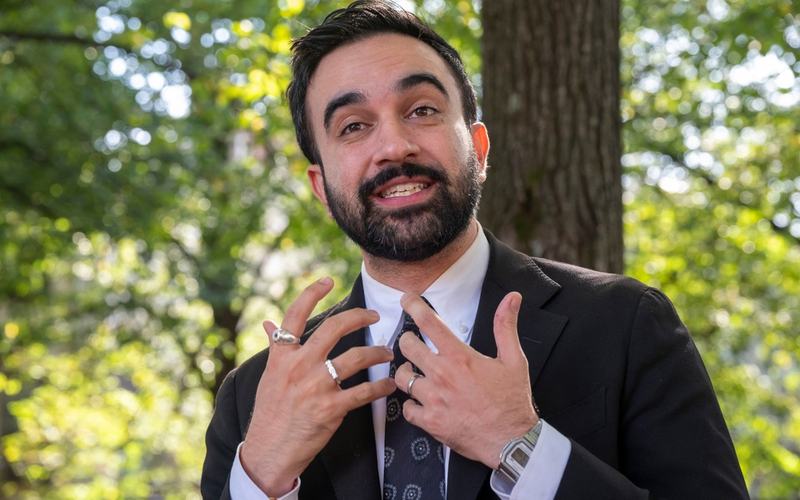
New York City Mayor Zohran Mamdani issued his first veto on Friday against a City Council bill that would have required the New York Police Department to create and publicize plans for security perimeters around educational facilities during protests.
The legislation, known as Intro 175-B and sponsored by Councilmember Eric Dinowitz, aimed to ensure safe access to schools and other educational institutions amid threats of obstruction, harassment, or physical injury. It broadly defined educational facilities to include universities, museums, and teaching hospitals, allowing NYPD to set buffer zone sizes on a case-by-case basis.
Mamdani argued the bill raised constitutional concerns by potentially restricting First Amendment rights. "As the bill is written, everywhere from universities to museums to teaching hospitals could face restrictions," he said. "This could impact workers protesting ICE, or college students demanding their school divest from fossil fuels, or demonstrating in support of Palestinian rights." He described it as alarming to labor unions, reproductive rights groups, and immigration advocates rather than a narrow public safety measure.
The bill passed the 51-member City Council last month by a 30-19 vote with one abstention, falling four votes short of the two-thirds majority needed to override a veto. A companion measure establishing similar protections around houses of worship, sponsored by Council Speaker Julie Menin, passed 44-5 and became law without a veto. Mamdani called it narrower in scope, requiring only documentation of existing NYPD practices while balancing the right to protest and worship.
The bills emerged amid concerns over protests following the October 7, 2023, Hamas attacks on Israel, including pro-Palestinian encampments on college campuses and a demonstration outside Park East Synagogue, where protesters chanted "Death to the IDF." Supporters cited rising antisemitism and Islamophobia as justification for enhanced security transparency.
Reactions split along familiar lines. Jewish organizations,s including UJA-Federation of New York, Anti-Defamation League, and AJC, expressed deep disappointment, calling the veto "a profound failure of City Hall to demonstrate to all New Yorkers that our safety is a priority." Hindy Poupko of UJA noted families feeling too scared to send children to school wearing kippot.
Menin defended the bill, stating, "Ensuring students can enter and exit their schools without fear of harassment or intimidation should not be controversial." She indicated discussions on overriding the veto. Rev. Al Sharpton also supported it, emphasizing protection for schools and religious sites.
Opponents praised the decision. The New York Civil Liberties Union commended Mamdani, arguing existing laws already address harassment. Labor groups like United Auto Workers and 1199 SEIU, along with Democratic Socialists of America, warned it could criminalize picket lines. Councilmember Tiffany Cabán called it "ill-conceived" and a threat to free speech.
The veto highlights early tensions between Mamdani, sworn in as mayor on January 1 after winning the 2025 election, and the Council.

Comments
No comments yet. Be the first to share your thoughts.