
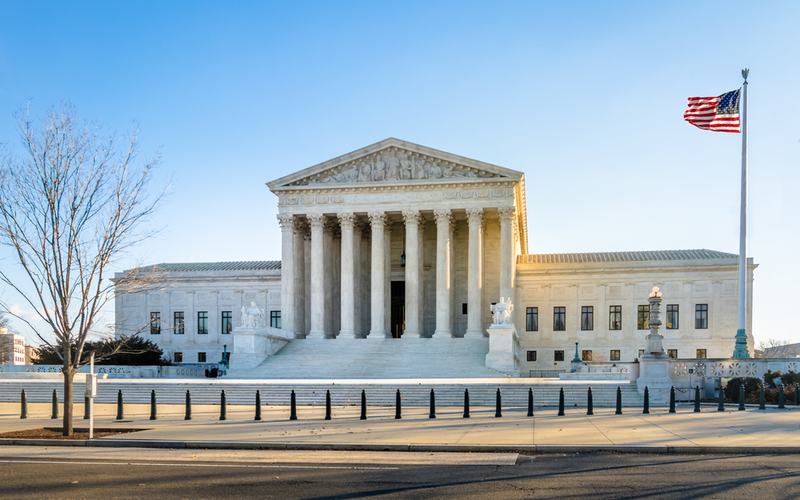
The Supreme Court on Friday sided with Republican party committees in a dispute over access to low-cost television advertising rates ahead of the November midterm elections.
In an unsigned order, the justices granted an emergency application from the National Republican Congressional Committee and the National Republican Senatorial Committee. The ruling stays a lower court decision that had blocked the Federal Communications Commission policy allowing parties to qualify for the same heavily discounted rates available to candidates.
Justice Ketanji Brown Jackson dissented from the order. The decision restores the FCC guidance and comes weeks before the lowest unit charge period for political ads begins on September 4.
The ruling follows a June 30 decision in which the court struck down longstanding limits on coordinated spending between parties and candidates in a 6-3 vote. That earlier ruling removed caps that had restricted how much national party committees could spend in direct coordination with federal candidates.
Republican committees have held a significant cash advantage over their Democratic counterparts this cycle. The National Republican Senatorial Committee and related groups ended May with more than double the cash reserves of Democratic counterparts, according to reports.
Democratic candidates from battleground states, including Sen. Jon Ossoff of Georgia, Rep. Kristen McDonald Rivet of Michigan, former Sen. Sherrod Brown of Ohio, and Roy Cooper of North Carolina, had challenged the FCC policy in court. A divided panel of the 4th Circuit Court of Appeals had sided with them, ruling that only candidates qualify for the discounted rates.
The Supreme Court found that Republican committees would suffer irreparable harm without the stay, noting that broadcasters were already rescinding favorable rates in response to the appeals court decision. The order emphasized the impact on efforts to reach voters in the critical weeks before the midterms.
The change allows party committees to purchase ad time at rates far below those paid by outside groups such as super PACs. In past cycles, this disparity meant Republican-aligned groups sometimes paid several times more than Democratic candidates for comparable airtime.
Republicans have indicated they will use the lower rates to expand coordinated advertising support for candidates in competitive House and Senate races.

Comments
No comments yet. Be the first to share your thoughts.