
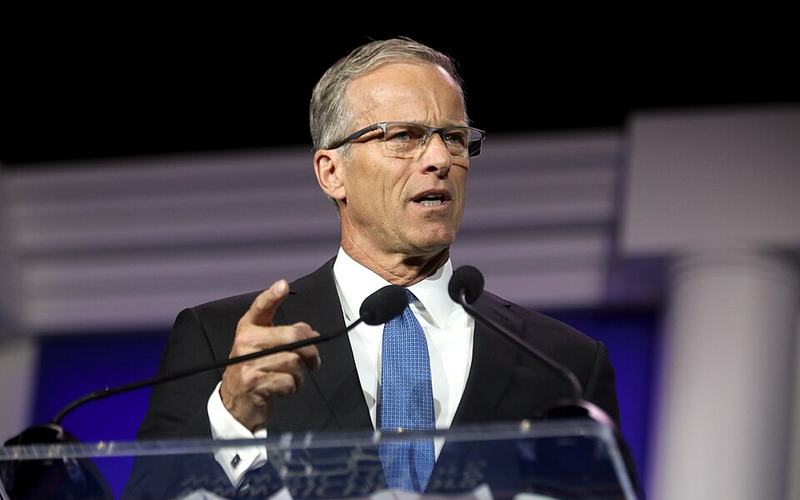
The Republican National Committee has released the first major slate of speakers for this week's historic midterm convention in Dallas, and the names missing from the stage may be just as interesting as those who made the list.
President Donald Trump will headline both nights, while Vice President JD Vance will deliver a keynote address on the second night. And the House will quite literally be in the house, with Speaker Mike Johnson, Majority Leader Steve Scalise, and Majority Whip Tom Emmer all scheduled to take the stage.
On the Senate side, however, the leadership picture looks noticeably different. Majority Whip John Barrasso and National Republican Senatorial Committee Chairman Tim Scott will both take the stage. One key name is conspicuously absent from the current lineup: Senate Majority Leader John Thune.
Thune isn't expected to skip Dallas altogether. He is expected to be in the city for fundraising events, and organizers say additional names are still being added to the convention's speaker roster.
His absence from the current lineup is particularly notable after months of public pressure from President Trump over one of his legislative priorities: the SAVE America Act. Trump repeatedly pressed Thune to keep the Senate in Washington and find a path to advance the election legislation before the midterms. Thune, however, maintained that Republicans simply did not have the votes.
The disagreement centered in part on the Senate filibuster. Republicans technically hold 53 seats, but in practice, Thune has been working with 52 votes during McConnell’s extended absence from the Senate following his June 14 hospitalization. McConnell has now missed 60 roll call votes.
Ending debate on most legislation requires 60 votes, meaning Thune would need eight additional senators to overcome a filibuster if McConnell remains unavailable and the other 52 Republicans are united behind the SAVE America Act. The alternative pushed by Trump would be eliminating the filibuster, something Thune has said he does not have enough Republican support to accomplish.
“If he can change the facts and start moving some of those senators who are nos into yeses, then we'd have a different conversation,” Thune told reporters in July. The disagreement became public enough that Trump directly called out Thune by name, demanding that he not allow senators to leave Washington without passing the legislation.
Now, weeks later, the Senate's highest-ranking Republican is absent from the announced stage at a convention designed in large part to energize Republican voters ahead of an election that will determine control of Congress.
And there's another layer to Thune's story: Mitch McConnell.
From McConnell’s Deputy to Senate Leader
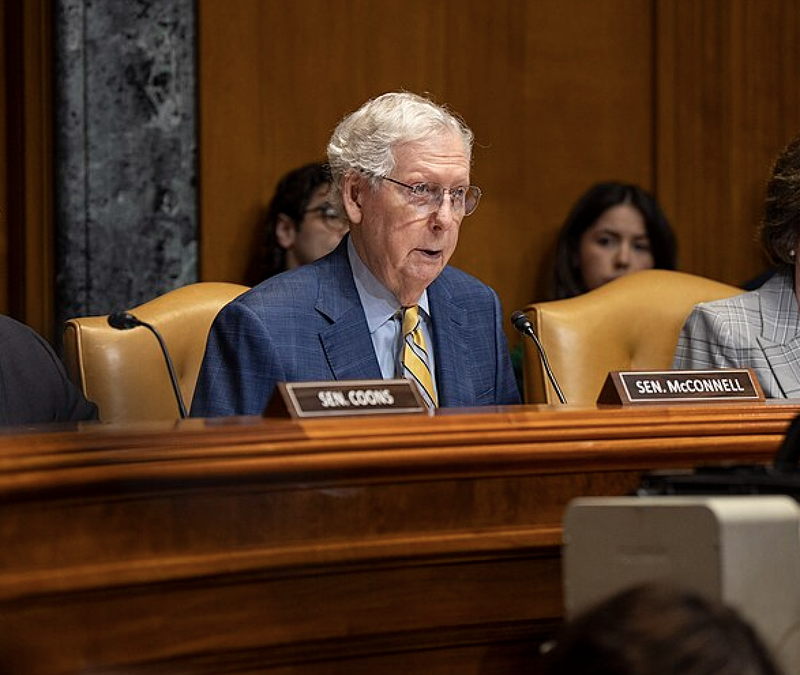
Before Thune became McConnell's successor, he spent years as one of his closest allies in Senate leadership. Beginning in 2019, Thune served as Republican whip, the No. 2 position in the conference, working directly under McConnell. Over the years, he came to be described as both a McConnell “protégé” and “mentee.”
Thune even stepped in to assume some of McConnell's leadership responsibilities when McConnell went on medical leave in 2023. As Republican whip at the time, Thune was already the No. 2 Republican in Senate leadership, and his temporary role at the helm was widely viewed as something of an audition for a potential future as Republican leader. That future arrived on November 13, 2024.
Thune defeated Senators John Cornyn of Texas and Rick Scott of Florida in a secret-ballot leadership election and became the Republican leader of the Senate, succeeding the man under whom he had risen through the leadership ranks. McConnell had led Senate Republicans for a record 18 years.
That mentor-successor relationship has taken on new significance this summer. McConnell has now been absent from the Senate for months following his hospitalization on June 14. That same morning, emergency personnel were dispatched to McConnell's Washington home for an unconscious person. Publicly available EMS dispatch audio described a cardiac arrest and CPR in progress at the address.
In the weeks following McConnell's hospitalization, Thune became one of a small group of prominent Republicans who publicly said they had spoken directly with the Kentucky senator. Thune's office said the two had a “lengthy and substantive conversation” covering several issues, including national security.
Majority Whip John Barrasso also reported speaking with McConnell, as did former McConnell aide and political commentator Scott Jennings. The conversations attracted attention because McConnell remained out of the public eye following his hospitalization and has largely remained so, while his office has continued to provide limited information about his condition.
Thune Inherits More Than McConnell’s Title
McConnell’s prolonged absence also comes as major legislation remains unresolved in the Senate, including the fiscal year 2027 National Defense Authorization Act. With Republicans operating with a narrow majority, every vote matters, including McConnell’s, as the Senate works to advance major legislation before the new fiscal year begins.
Thune leads the conference in a different political environment than his mentor, McConnell. He is responsible for managing a narrow Republican majority while navigating demands from a president who has publicly pushed him to deliver legislative outcomes that Thune says the Senate math simply will not allow.
Yet, the tension itself is familiar. McConnell frequently clashed with Trump over Senate procedure, political strategy and the limits of what Republican senators were willing to support. Now Thune finds himself confronting some of those same realities.
At the convention, the contrast in Senate leadership will be difficult to miss. The House speaker, House majority leader, House majority whip, Senate majority whip and the chairman responsible for electing Republican senators are all scheduled to take the stage. The Senate majority leader, at least for now, is not. So why isn't John Thune onstage?
There may ultimately be a straightforward explanation. Thune may have chosen not to speak. Organizers may still add him. Or the decision may simply reflect how the RNC chose to allocate speaking time. Still, the timing makes the omission worth asking about. After this November's elections, Senate Republicans will again organize for the next Congress and choose their leadership.
The more important question, then, isn't whether one missing convention speech determines John Thune's political future. It's whether his absence from this particular stage tells us anything about his relationship with President Trump, his standing within the Republican conference and the role he intends to play in the party after the midterms.
For a senator who spent years preparing to succeed Mitch McConnell, the first midterm convention under his own leadership leaves one question hanging over the Dallas stage:
Why isn't John Thune at the microphone?

Comments
No comments yet. Be the first to share your thoughts.