
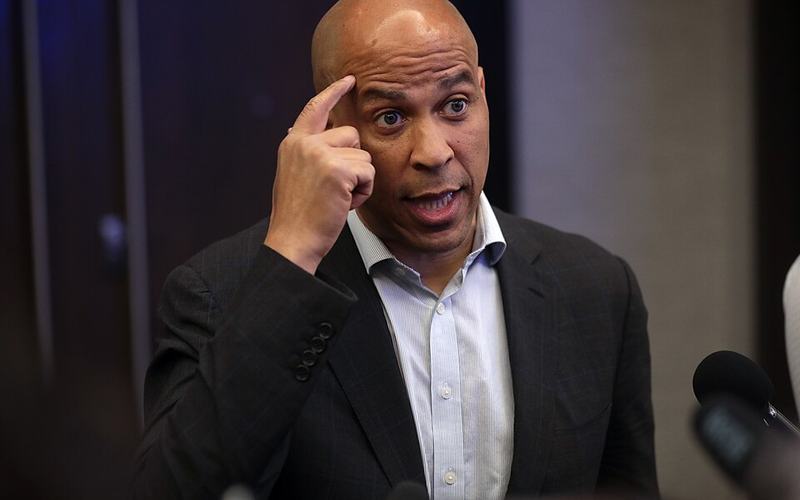
Sen. Cory Booker, a New Jersey Democrat, called Sunday for major changes to the Supreme Court, arguing during NBC’s “Meet the Press” that justices should serve 18-year terms and face stricter ethics requirements. Booker said the proposal would create a more predictable appointment process while rejecting calls from some Democrats to add seats to the court.
Booker has repeatedly promoted the 18-year proposal with Democratic senators Sheldon Whitehouse, Richard Blumenthal and Alex Padilla. Their legislation would establish a system in which presidents make two Supreme Court appointments during each four-year term, while justices completing their 18 years would move into a limited senior role. Booker reintroduced the legislation in July.
During the interview, Booker went further in his criticism of the Supreme Court, declaring that “we have a compromised court” and accusing justices of accepting unlimited gifts from billionaires with interests in cases before the court. Those statements reflect Booker’s political argument for additional ethics restrictions, rather than an established finding that the Supreme Court as an institution is compromised.
Booker has also sponsored separate legislation that would create an Office of Ethics Counsel and an Office of Investigative Counsel within the Supreme Court. His proposal would provide ethics guidance to justices and investigate alleged ethical misconduct before reporting findings to Congress.
The senator's push comes as Democrats continue debating how aggressively to change the Supreme Court. Former Vice President Kamala Harris has supported expanding the number of justices, while Booker has presented term limits and ethics rules as an alternative to adding seats.
Booker said he wants what he described as a pragmatic approach, arguing that 18-year terms could be enacted without a constitutional amendment. His proposal, however, would substantially change the way Supreme Court tenure and appointments operate under the current system, which gives federal judges tenure during “good Behaviour.”
The debate also raises constitutional questions over how far Congress can regulate the Supreme Court. Booker's legislation relies on Congress's authority over the Court's appellate jurisdiction rather than directly ending the constitutional tenure of sitting justices. The approach has drawn legal debate over the separation of powers and Congress's authority to impose such restrictions.
Booker is now making Supreme Court reform a prominent part of his agenda, combining his term-limit proposal with calls for tougher ethics oversight. His comments Sunday put renewed attention on the senator's argument that changes to the court's structure and ethics rules are necessary

Comments
No comments yet. Be the first to share your thoughts.