
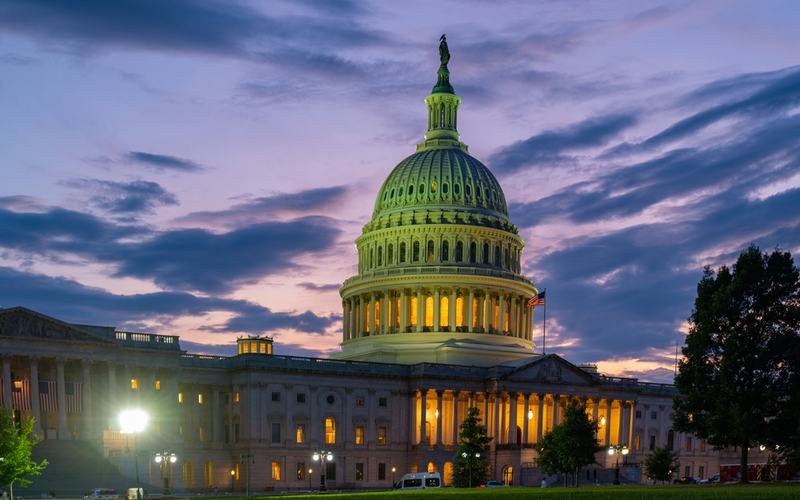
Hundreds of American elected officials have faced violent threats over the past two years, according to a New York Times investigation published Sunday, highlighting growing security concerns as candidates enter the final weeks of the 2026 midterm campaign.
The investigation identified threats targeting at least 70 U.S. senators, 185 members of the House of Representatives and 44 governors between 2024 and August 2026. Threats also reached more than half of the nation's secretaries of state, many of whom oversee election administration.
The findings drew on more than 100 public-records requests, court documents, and law enforcement logs. The reported threats targeted Republicans and Democrats alike, illustrating the security challenges facing public officials across the political spectrum.
Federal data reinforces the scale of the problem. The U.S. Capitol Police investigated 14,938 cases involving concerning statements, behaviors, and communications directed at lawmakers, their families, staff, and the Capitol in 2025, up from 9,474 cases in 2024. That represents an increase of nearly 58% in a single year.
Despite the growing number of cases, relatively few result in criminal charges. The investigation identified only 53 federal cases over the two-year period in which someone was charged with threatening a public official other than the president.
Former Capitol Police Chief J. Thomas Manger told the Times that fewer than 10% of the cases handled by his investigators in 2021 resulted in charges. Prosecutors can face obstacles involving the wording of threat statutes, constitutional protections for free speech, and the difficulty of identifying people who send threats anonymously.
The threats are also imposing a growing financial burden on political campaigns. Federal candidates spent roughly $6 million on security during the 2017-2018 election cycle, compared with at least $25 million in the current cycle through Aug. 1, according to campaign finance records cited by the Times. The latest figure is more than four times the earlier total and does not include officials' personal security expenses.
In Indiana, Republican state Senate President Rodric Bray became a prominent target after his chamber voted 31-19 in December 2025 to reject a congressional redistricting plan backed by President Donald Trump. The proposal sought to eliminate the state's two Democratic-held congressional districts.
At least 12 elected Republicans in Indiana faced threats or swatting attempts, according to NBC News. Swatting involves making a false emergency report to provoke a potentially dangerous police response at a targeted person's home or location.
Bray told the Times that bomb threats and death threats targeted both his office and his home. He also began varying his daily routine as a precaution. He plans to leave his Senate leadership position in November amid the fallout from the redistricting dispute.
Former Republican Rep. Marjorie Taylor Greene of Georgia has also spoken publicly about threats directed at her family. Greene left Congress in January after breaking with Trump over the release of files related to convicted sex offender Jeffrey Epstein.
In a speech in May, Greene said she texted Trump about threats against her son and that he responded by telling her “that it was my fault, and I deserve it,” according to CBS News. The White House did not deny the account's specific contents in its response to the Times investigation. Spokesman Davis Ingle said Trump condemns political violence.
Democratic Sen. Elissa Slotkin of Michigan also faced a wave of threats after posting a video in November with five other lawmakers reminding military personnel that they are not required to obey unlawful orders. Trump criticized the message as seditious.
Slotkin said the threats extended to her family when someone swatted her parents' home while her father was dying of cancer. She emphasized that the threats affected people who had not chosen public office.
“I signed up for this, but my family and my staff did not,” Slotkin told the Times.
Capitol Police Chief Michael Sullivan warned House appropriators in March that threats against members of Congress in 2026 were on pace to surpass the previous year's total. The warning has intensified concerns about the resources required to protect lawmakers, their families and congressional staff.
The rising security demands come as campaigns prepare for a contentious midterm election in which control of Congress is at stake. While officials from both parties have been targeted, the cases demonstrate how political disputes over redistricting, presidential policies and other high-profile issues can spill over into threats against elected leaders and their families.
The growing cost of protection and the difficulty of prosecuting many threats leave officials facing a dual challenge: securing public servants without unnecessarily restricting lawful political expression. With election season entering its final stretch, federal authorities have warned that the threat environment remains a serious concern.

Comments
No comments yet. Be the first to share your thoughts.