

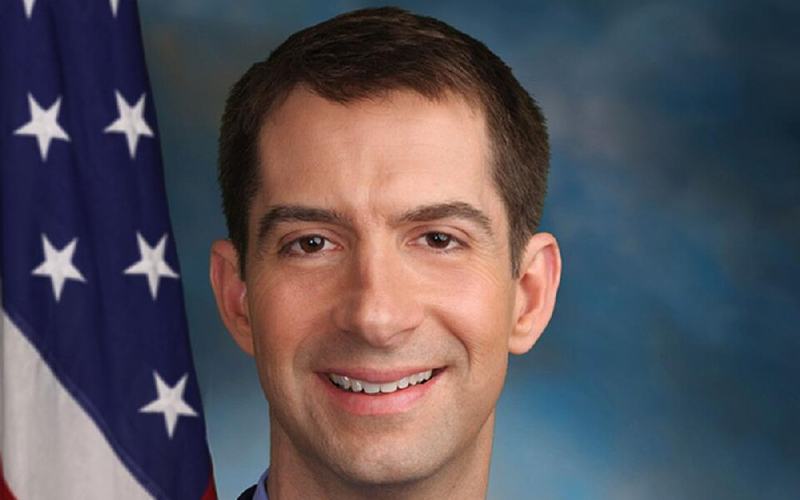
Republican Sen. Tom Cotton defeated Democratic challenger Hallie Shoffner in Arkansas’ U.S. Senate race, securing another six-year term and preserving the seat for Republicans. Cotton’s victory ends a Democratic effort to capitalize on economic frustrations among rural voters and concerns over the financial pressures facing Arkansas farmers.
Cotton, who has represented Arkansas in the Senate since 2015, entered the election as one of the most prominent Republican voices in Washington and a close ally of President Donald Trump. A former Army officer who served in Iraq and Afghanistan, Cotton previously represented Arkansas’ 4th Congressional District before winning his first Senate election in 2014. He has built a national profile through his positions on national security, immigration enforcement, military spending, and foreign policy.
Throughout the campaign, Cotton emphasized his support for Trump's agenda, lower taxes, border security, law enforcement and strengthening the American military. He argued that his seniority and influence in Washington allowed him to deliver for Arkansas through economic development, defense industry investment and federal funding.
Shoffner, a former farmer and agricultural advocate from northeastern Arkansas, attempted to make the race competitive by focusing on the struggles facing rural communities. Her family had farmed in Jackson County for generations before financial pressures forced her to liquidate most of the operation in 2025. She used that experience to criticize federal agricultural policy, rising fertilizer and fuel costs, tariffs, and what she described as Washington's failure to adequately support small farmers.
Agriculture became one of the defining issues of the campaign. Arkansas is among the nation's leading agricultural states, particularly in rice, soybeans and poultry production. Shoffner argued that farmers were being squeezed by higher operating expenses, weak commodity markets and trade policies that made it harder to compete internationally. She called for greater support for family farms, more investment in rural communities and policies to diversify the state's agricultural economy.
Cotton defended his record on agriculture, pointing to his support for certain federal assistance programs and his efforts to secure additional aid for farmers. However, Shoffner repeatedly criticized his previous opposition to Farm Bill provisions and his support for Trump's broader tariff policies. Cotton maintained that targeted tariffs could protect American producers from unfair foreign competition, including subsidized agricultural imports.
The candidates also clashed over health care and the future of Medicaid. Cotton supported the Trump administration's major tax and spending legislation, which included reductions in federal Medicaid spending. Shoffner argued that those changes could place additional pressure on Arkansas families and rural hospitals, particularly in communities where access to medical care is already limited. She called for expanding rural health services, increasing access to telehealth and strengthening support for Medicare and Medicaid.
Another major point of disagreement involved Cotton's relationship with Arkansas voters. Shoffner accused the incumbent of spending too much time building his national political profile while remaining disconnected from everyday concerns in his home state. She also criticized his refusal to participate in debates with his opponents, arguing that voters deserved more direct engagement from their senator.
Cotton's campaign rejected the criticism and pointed to his legislative record, including support for tax cuts, military investment, border security, and economic development. His supporters argued that his influence in Washington gave Arkansas a stronger voice on national issues and helped attract investment to the state's defense industry.
Despite Shoffner's efforts to make the contest competitive, Cotton maintained substantial advantages in fundraising and national Republican support. Federal campaign finance records through October 14 showed Cotton's campaign had raised approximately $14.5 million, compared with roughly $4 million for Shoffner. Republican-aligned outside groups also spent heavily in the race, including millions of dollars supporting Cotton or opposing his Democratic challenger.
The campaign attracted attention because Democrats viewed Arkansas as an opportunity to test whether dissatisfaction over affordability and agricultural conditions could create openings even in traditionally Republican states. An August Talk Business & Politics-Hendrix College poll briefly showed Shoffner leading Cotton 47.4% to 44% among likely voters, although the difference fell within the survey's 4.7-point margin of error. The poll demonstrated the attention the contest was receiving, but Cotton ultimately held onto the seat.
For Republicans, Cotton's reelection preserves an important Senate seat in a state that has become firmly Republican in federal elections. For Democrats, Shoffner's defeat demonstrates the difficulty of translating economic dissatisfaction into statewide victories in Arkansas, even when a challenger has a personal connection to the issues dominating the campaign.
Cotton will return to Washington for another six-year term, continuing his role as one of the Republican Party's most prominent national-security and foreign-policy voices. His victory gives Republicans another successful defense of an incumbent Senate seat, although control of the chamber will depend on the results of the remaining competitive races nationwide.

Comments
No comments yet. Be the first to share your thoughts.