
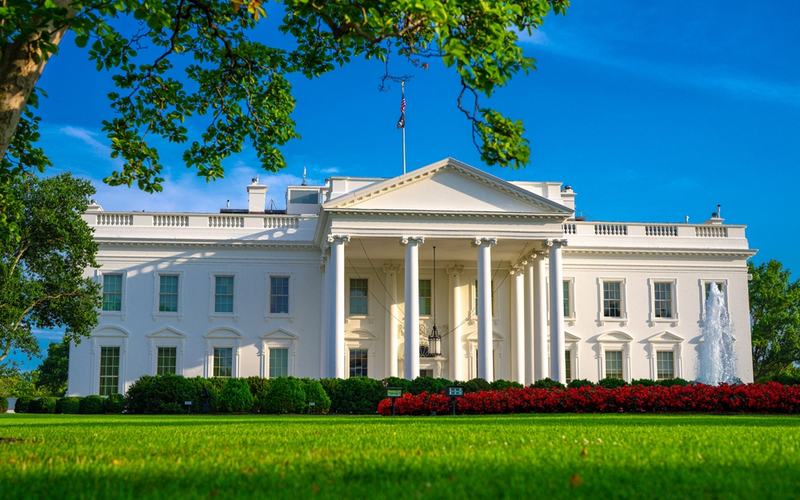
A majority of American voters expect Democrats to win the White House in 2028, with nearly twice as many predicting a Democratic victory as a Republican one, according to a new Politico poll conducted by PF Global.
The survey was conducted in the days following Democrats' victories in the November 3 midterm elections, when the party captured control of both chambers of Congress. The results suggest that the election outcomes have influenced expectations about the next presidential race, including among some voters who supported President Donald Trump in 2024.
Among Trump voters, 60% expect Republicans to win the presidency in 2028, while 22% believe the party will lose. By comparison, 87% of former Vice President Kamala Harris' supporters expect Democrats to capture the White House.
The poll also revealed disagreements among Republicans about the party's direction and the type of candidate it should nominate. While some voters want a successor who maintains a close relationship with Trump and his administration, others prefer a candidate who can establish a separate political identity.
Nearly 30% of Trump voters said they would prefer a 2028 Republican nominee who has not served in the Trump administration. That figure rises to 46% among Trump supporters who do not identify with the MAGA movement. Among MAGA voters, however, 82% prefer a presidential candidate who has served in Trump's administration.
The disagreement has fueled speculation about potential Republican contenders, including Secretary of State Marco Rubio and Vice President JD Vance. Some congressional Republicans reportedly view Rubio as a stronger option because they believe he carries less political baggage from the midterm defeats than Vance.
Other Republicans argue the party needs a nominee who can move beyond Trump's political orbit altogether. Dan McMaster, chairman of Michigan's Shiawassee County Republican Party, said neither Rubio nor Vance should lead the ticket.
"As much as I like Rubio, and as much as I like Vance, they can't be our nominee," McMaster said.
Republican National Committee spokesperson Natalie Baldassarre pushed back against calls for Trump to reduce his influence over the party, emphasizing his standing among Republican voters and his administration's policy accomplishments.
"President Trump remains the unequivocal leader of our party who's cut taxes, lowered drug costs, and secured our border," she said.
The White House also pointed to separate polling showing Trump with a 75% approval rating among Republicans and 93% among MAGA supporters, arguing that he continues to maintain strong support within the party's base.
Democrats face their own divisions over the direction of their next presidential campaign. Although the party's midterm victories have strengthened its political position, the survey found a significant divide between progressive and moderate voters over the type of candidate they want in 2028. Among Democrats, 63% of progressives said they prefer a progressive presidential nominee, compared with just 23% of moderates.
The poll also found broad support within both parties for expanding their electoral strategies beyond the traditional battleground states. Approximately 60% of Democrats and 56% of Republicans said their parties should compete in more states nationwide rather than concentrating primarily on a limited number of competitive contests.
Meanwhile, Democratic victories at the state level have renewed attention to the National Popular Vote Interstate Compact, an agreement through which participating states pledge to award their electoral votes to the winner of the national popular vote once the compact reaches the required threshold.
States currently participating in the agreement represent 222 electoral votes, leaving it 48 short of the 270 needed for the compact to take effect. Supporters argue the arrangement would ensure the candidate receiving the most votes nationwide wins the presidency, while critics contend it could weaken the Electoral College and reduce the political influence of smaller states.
The debate could become another point of contention as both parties begin preparing for the 2028 presidential election, particularly if Democrats continue expanding support for the compact in additional states.

Comments
No comments yet. Be the first to share your thoughts.