
Defense Secretary Pete Hegseth announced Wednesday that Elon Musk, Anduril founder Palmer Luckey and former House Speaker Newt Gingrich will co-lead a 120-day Pentagon study on the future of warfare called Project Meridian.
The initiative aims to identify domains and capabilities the U.S. military must master to achieve technological dominance in future conflicts, according to a Pentagon statement. It will examine battlefields from subterranean depths to the cislunar frontier and recommend weapons and systems for potential wars in 2030, 2050 and 2100.
Pentagon officials have raised alarms about the project, warning that Musk and Luckey head companies with billions in existing defense contracts and could steer recommendations to benefit their firms. Nine current and former officials told reporters that preferential access might allow the executives to funnel additional business their way.
Hegseth unveiled the commission during a “State of the Force” address at Marine Corps Base Quantico, Virginia. He described it as an effort to bring in America’s best minds from outside traditional defense channels to forecast creative solutions for tomorrow’s conflicts.
The project will operate under the oversight of Pentagon technology chief Emil Michael and involve a broader team of experts from government, industry, academia and policy circles. Findings are due no later than Jan. 28, 2027, with an unclassified public report and a classified annex.
Musk’s SpaceX has secured major recent contracts, including a $2.29 billion award in May for a military satellite communications network and a $4.16 billion award days later for satellites to track airborne threats. Anduril supplies jammers, interceptors and autonomous systems to the military.
The announcement came alongside other Hegseth initiatives, including plans to cut about 20 percent of top military officer positions and the creation of a new four-star Autonomous Warfare Command focused on drones and robotic systems.
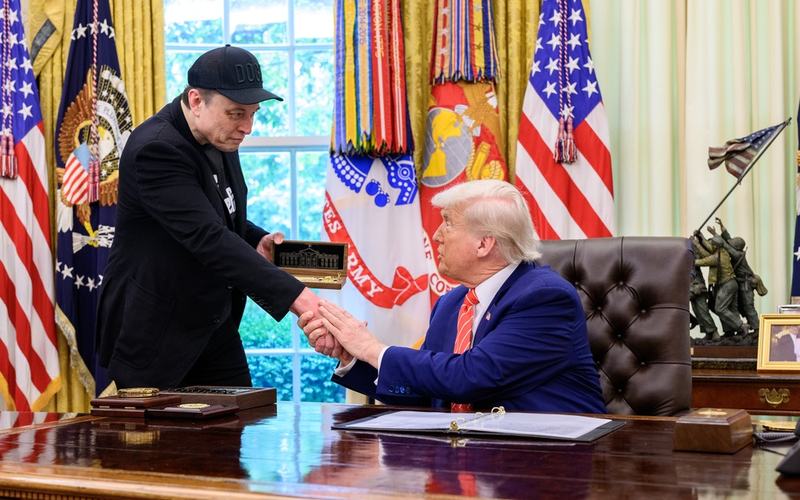
Pentagon spokespeople said the effort will be facilitated by the nonprofit MITRE and emphasized the need to leverage private-sector innovation to maintain an edge over adversaries. The commission marks Musk’s return to an advisory role in the Trump administration following his earlier work with the Department of Government Efficiency.

Comments
No comments yet. Be the first to share your thoughts.