
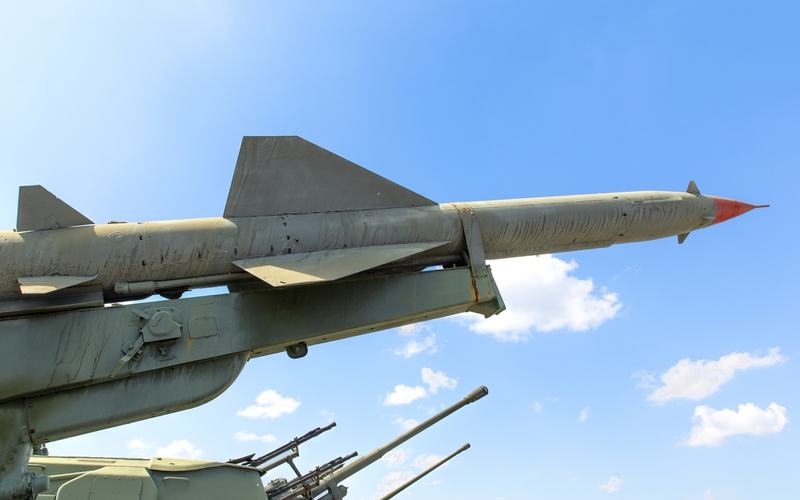
North Korea launched multiple ballistic missiles toward its eastern waters on Monday, Oct. 12, prompting protests from neighboring countries as tensions rise across the Korean Peninsula and diplomatic efforts remain stalled.
South Korea's Joint Chiefs of Staff said the missiles were fired from an area near Pyongyang, where the North's main airport has served as a launch site for weapons tests in recent years. South Korean military spokesperson Jang Do-young said at least one missile traveled more than 900 kilometers (559 miles) before landing in the sea. Officials did not disclose the total number of missiles detected or provide flight details for all the weapons.
Japan reported detecting at least two launches separated by 17 minutes. Deputy Defense Minister Takashi Koyari said the first missile traveled approximately 220 kilometers (137 miles), while the second flew more than 910 kilometers (565 miles). The longer-range missile followed what Koyari described as an irregular flight path, raising the possibility that it was a hypersonic weapon. Both missiles landed outside Japan's exclusive economic zone, and authorities reported no damage to aircraft or vessels.
The launches are part of North Korean leader Kim Jong Un's continuing effort to expand the country's arsenal of nuclear-capable weapons. Pyongyang has intensified missile tests and military demonstrations while refusing to resume long-stalled negotiations with Washington and Seoul.
On Oct. 3, North Korea tested what it described as a hypersonic intermediate-range missile designed to evade missile defense systems in South Korea and Japan. The regime has also conducted additional missile tests and live-fire drills and commissioned a new warship as Kim continues to promote the country's military capabilities.
South Korean officials said Monday's launches may have been intended to advance North Korea's missile technology while also responding to the South's recent weapons development.
South Korea flight-tested its own domestically developed hypersonic weapon on Friday. Designed to travel at least five times the speed of sound and evade missile defenses, the weapon is intended to strengthen the country's conventional military capabilities. President Lee Jae Myung's office said the system, once fully developed, would improve South Korea's ability to strike key targets by surprise in the Korean Peninsula theater of operations.
Following Monday's launches, South Korea's presidential national security office called on Pyongyang to "immediately cease" its repeated ballistic missile tests, noting that the launches violate U.N. Security Council resolutions and do not contribute to stability on the peninsula. Japan also lodged a formal protest through diplomatic channels in Beijing, Koyari said.
Relations between the two Koreas have deteriorated further following land mine explosions near their heavily fortified border last month that injured three South Korean soldiers. South Korea's military and the U.S.-led United Nations Command concluded that the explosions were caused by mines planted by North Korea. Pyongyang has denied responsibility and rejected Seoul's demands for an apology.
Kim has halted diplomatic engagement and cooperation with South Korea in recent years, declaring the neighboring country a permanent enemy. Negotiations with the United States have also remained frozen since talks broke down in 2019.
President Donald Trump has called for renewed diplomacy with North Korea, but Kim's government has so far rejected those overtures. Pyongyang has demanded that Washington abandon what it calls a hostile policy and drop denuclearization requirements as a precondition for negotiations.
Monday's launches underscore the continuing military standoff, with North Korea pressing ahead with weapons development while South Korea and Japan strengthen their defenses and call for an end to the provocations.

Comments
No comments yet. Be the first to share your thoughts.