
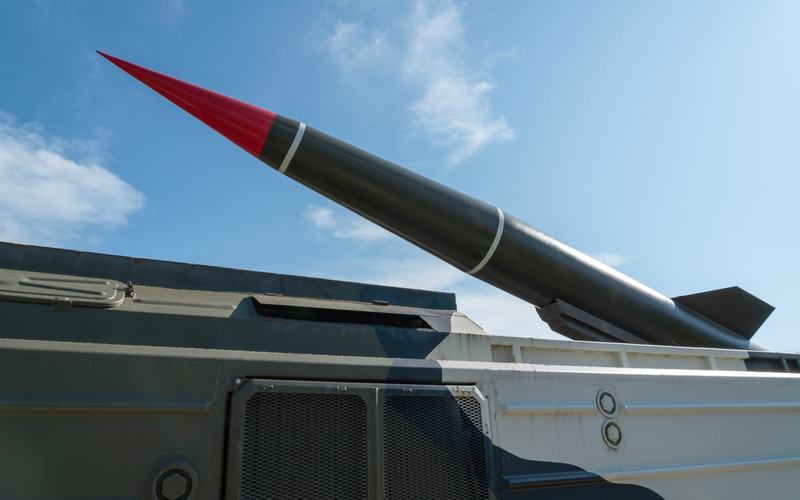
North Korea launched two short-range ballistic missiles from the Wonsan area toward the East Sea on Sunday, South Korea’s military said. The launches occurred about three hours apart, with the first missile traveling roughly 450 kilometers and the second flying more than 600 kilometers before landing in the sea.
South Korea condemned the launches as violations of U.N. Security Council resolutions and urged Pyongyang to stop its ballistic missile activity. U.S. and South Korean authorities tracked the launches, while U.S. Pacific Command said the tests did not pose an immediate threat to U.S. personnel, territory or allied countries. Japan also detected the launches and said the missiles did not land in its territorial waters.
The launches came days after Kim Jong Un’s sister, Kim Yo Jong, criticized U.S.-led military exercises in the region and warned that North Korea would continue strengthening its nuclear deterrent. She specifically condemned the multinational Pacific Vanguard exercise involving the United States, South Korea, Japan, Australia, New Zealand and Canada.
North Korea has continued weapons demonstrations even after Trump ordered the Pentagon to substantially reduce the annual Ulchi Freedom Shield exercise with South Korea. Trump has cited his relationship with Kim as part of his effort to reduce tensions and create an opening for renewed diplomacy.
The latest launches follow another North Korean live-fire drill last week involving ballistic missiles, artillery, attack drones and other weapons. South Korean officials said the exercise included missiles traveling about 250 kilometers toward the sea and represented another demonstration of North Korea’s expanding military capabilities.
Diplomatic efforts remain uncertain. Kim has previously said North Korea could consider returning to talks if Washington abandons what Pyongyang calls a hostile policy and accepts its status as a nuclear state. South Korean President Lee Jae Myung has also urged Trump to pursue renewed dialogue with Kim, describing U.S.-North Korea talks as an important starting point for reducing tensions on the Korean Peninsula.

Comments
No comments yet. Be the first to share your thoughts.