
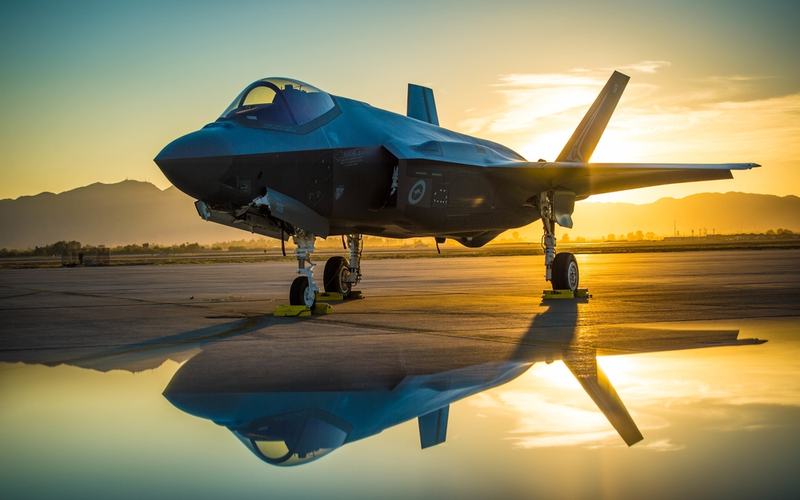
The U.S. Department of War has reached a preliminary agreement with defense contractor Lockheed Martin to produce and sustain at least 850 F-35 Lightning II fighter jets over the next decade, officials announced Thursday.
The framework agreement is designed to provide greater stability for production, spare parts, aircraft upgrades and maintenance while helping the military maintain its fleet of advanced stealth fighters. The arrangement is not yet a finalized procurement contract and requires congressional approval and funding before the parties can establish final pricing and delivery schedules.
Under the agreement, Lockheed Martin will aim to maintain production at 156 aircraft annually for U.S. and international customers. The company also committed to funding at least $7 billion in initiatives supporting the F-35 program, including efforts intended to expand manufacturing capacity and strengthen the supply chain.
The F-35 uses stealth technology designed to make it harder for enemy radar systems to detect. The aircraft is operated by the U.S. Air Force, Navy and Marine Corps, as well as allied nations, making it a central component of American and allied airpower.
The agreement also covers international customer orders, initial spare parts, modification kits and long-term support for the global F-35 fleet. Neither the Pentagon nor Lockheed Martin disclosed a total value for the framework.
Under Secretary of Defense for Acquisition and Sustainment Michael Duffey said the agreement reflects a shift toward linking financial incentives with performance to strengthen the American defense industrial base and deliver equipment to U.S. military personnel.
Lockheed Martin estimates the arrangement could support approximately 317,000 American jobs and generate nearly $79 billion in annual economic activity over the next decade. The company also expects more predictable orders to help lower production costs and ease supply shortages.
The agreement comes as the Pentagon seeks to expand weapons production amid continuing international security challenges. If Congress authorizes the multiyear procurement plan and provides the necessary funding, the Pentagon and Lockheed Martin will move forward with a formal contract.

Comments
No comments yet. Be the first to share your thoughts.