
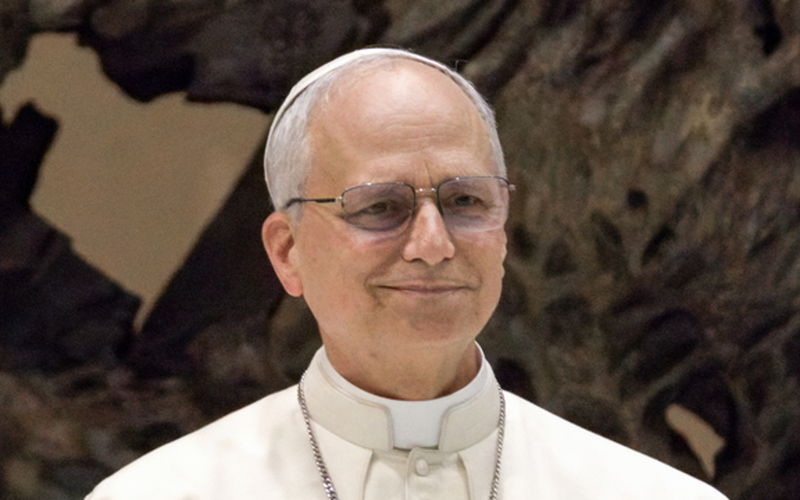
Pope Leo XIV entered Rome’s Gemelli Hospital on Tuesday ahead of a scheduled operation to remove a lung nodule, marking the first publicly disclosed major health concern of his papacy. The 71-year-old pontiff arrived after a short drive from the Vatican and waved to well-wishers gathered outside the hospital.
The Vatican said the procedure would take place later Tuesday under a medical team led by Dr. Stefano Margaritora, Gemelli’s chief thoracic surgeon. The pope is expected to remain hospitalized for approximately one week, and the Vatican has canceled his scheduled audiences through October 20.
Leo disclosed the discovery of the small, localized nodule during his Sunday noon prayer, offering an unusually public account of his health as he prepared for treatment. Vatican officials said the abnormality was found during routine medical checks.
The primary purpose of the procedure is to remove the nodule and establish whether it is malignant. Doctors may perform a biopsy and, depending on the findings, remove a portion or an entire lobe of the affected lung. The procedures could potentially be completed during the same operation under general anesthesia.
Dr. Lorenzo Spaggiari, director of thoracic surgery at the European Institute of Oncology in Milan, said the outlook could be very favorable if the nodule proves cancerous but is removed before the disease spreads. He is not involved in the patient’s treatment but said he knows the medical team at Gemelli.
“If all those lymph nodes turn out to be negative, so stage one, then the outlook is very good,” Spaggiari said, explaining that patients with early-stage disease may not require additional treatment.
Modern robotic technology could allow surgeons to perform the procedure through several small incisions rather than a larger opening in the chest. The technique uses robotic instruments controlled by the surgeon while viewing a high-definition, three-dimensional image of the surgical site. However, the Vatican had not confirmed which surgical method would be used for Leo.
The discovery of a lung nodule does not necessarily mean a patient has cancer. Such abnormalities can be benign, and doctors often recommend removal when necessary to determine the diagnosis and treat a potential malignancy while it remains localized.
Tokyo Cardinal Kikuchi Tsutomu, who met with Leo on Monday, said the pope told him he felt fine and wanted to proceed with the operation promptly to avoid disrupting planned overseas travel.
“He has decided to undergo surgery soon to not change his plans for future overseas trips, so there is no need to worry, as it is not an emergency,” Kikuchi wrote on the Tokyo archdiocese’s Facebook page.
The pope’s next major international trip is scheduled for November 6-17, with planned stops in Uruguay, Argentina and Peru. The itinerary would involve more than 19,000 miles of travel, multiple flights and helicopter rides, as well as significant changes in altitude during the Peru portion.
Recovery time will be an important factor in determining whether Leo can follow the itinerary as planned. Spaggiari said his institute advises patients to avoid flying for three weeks after this type of surgery, although the pope’s medical team will determine the appropriate restrictions based on his procedure and recovery.
Despite the uncertainty surrounding the diagnosis, Spaggiari expressed confidence in the hospital’s capabilities, saying Leo was in excellent hands.
The operation will provide doctors with a clearer understanding of the nodule and whether additional treatment is needed. Until the findings are available, the Vatican has not disclosed a definitive diagnosis.

Comments
No comments yet. Be the first to share your thoughts.