
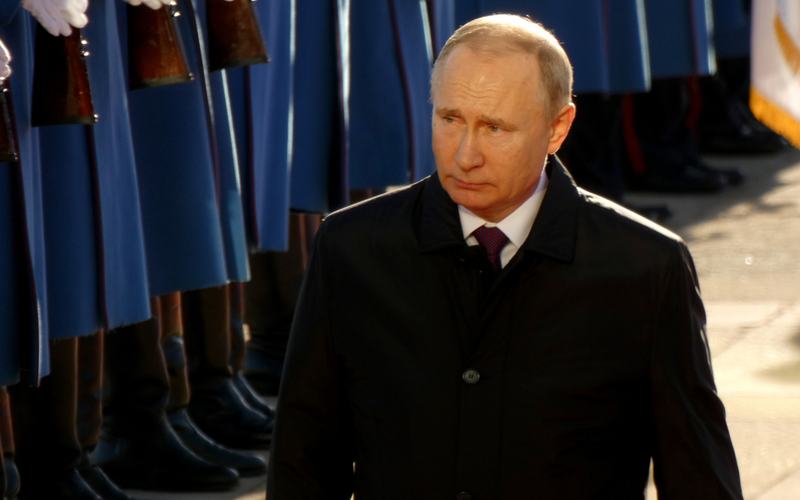
Russian President Vladimir Putin said Thursday that future talks to end the war in Ukraine must focus on security guarantees for both Russia and Ukraine along with a broader framework for security across Europe.
In a televised interview, Putin confirmed Russia's readiness to resume U.S.-mediated negotiations with Ukraine as soon as next month. He met the previous day with U.S. presidential envoy Steve Witkoff in St. Petersburg.
"The goal of these talks will be to ensure the security of Ukraine and Russia after reaching peace agreements, in their final form, not as a result of a temporary ceasefire for some short period of time," Putin said. "We are ready to resume these contacts to achieve this goal."
Putin noted that Witkoff emphasized the need to discuss "the architecture of European security as a whole," adding that he agreed with the approach. He said Russia seeks a lasting settlement rather than any pause in fighting.
The remarks followed Witkoff's meetings with Ukrainian President Volodymyr Zelensky and European leaders in Oslo earlier in the week. Zelensky indicated Ukraine is prepared for talks likely to begin by early November.
Kremlin aide Yury Ushakov said the trilateral discussions could start around November 10, possibly in Abu Dhabi. The focus would remain on post-war security arrangements for Russia and Ukraine.
Putin has long argued that Western security structures, including NATO expansion, ignore Russia's core interests. The latest comments align with Moscow's consistent position that any deal must address those concerns to prevent future conflict.
Ukraine has insisted on strong security guarantees, including models similar to NATO's Article 5 collective defense. European capitals have watched the U.S. mediation efforts closely amid stalled progress since earlier rounds collapsed in February.
The developments come as the Trump administration continues pushing for a resolution to Europe's largest conflict since World War II. No final details on participants or exact agenda have been confirmed beyond the security focus.

Comments
No comments yet. Be the first to share your thoughts.