

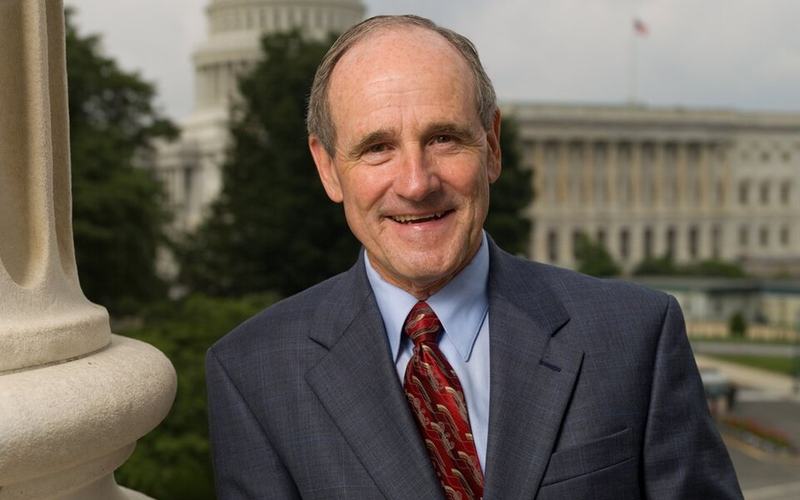
Republican Sen. Jim Risch has defeated independent challenger Todd Achilles in Idaho’s U.S. Senate race, securing a fourth term and maintaining Republican control of the seat he has held since 2009. The victory comes after Achilles mounted one of the more serious independent challenges to a Republican senator in Idaho in recent years, attempting to unite disaffected conservatives, independents and Democrats behind his campaign.
Risch, 83, has represented Idaho in the Senate for nearly two decades and currently serves as chairman of the Senate Foreign Relations Committee. A former Idaho governor who served from 2006 to 2007, Risch previously held positions as lieutenant governor and state Senate president pro tempore. His long record in state and national politics, along with his influential role on foreign policy, formed the foundation of his reelection campaign.
Risch campaigned on his conservative voting record, support for President Donald Trump’s agenda, national security, and expanding American energy production. He argued that his seniority and leadership position on the Foreign Relations Committee give Idaho an influential voice in Washington. He also emphasized his work supporting nuclear energy development, an especially important issue for a state that is home to the Idaho National Laboratory.
Achilles, an Army veteran and former Idaho state representative, ran as an independent after leaving the Democratic Party and later resigning from the state legislature to pursue the Senate seat. Before entering politics, he held senior leadership positions at major technology and telecommunications companies, including T-Mobile and Hewlett-Packard. His campaign sought to appeal to voters who felt neither major political party was adequately representing their interests.
A central argument of Achilles’ campaign was that Risch had spent too long in Washington and that Idaho needed a new generation of leadership. Achilles repeatedly criticized the senator’s age, pointing to his nearly 20 years in the Senate and arguing that his tenure had not produced enough progress on issues such as the national debt and government spending. He also criticized Risch's support for certain Trump administration policies, including military spending and foreign policy decisions.
Achilles attempted to distinguish himself from the Democratic Party, emphasizing his previous voting record in the Idaho Legislature and his willingness to work across party lines. He argued that independent voters and Republicans dissatisfied with the direction of their party could support him without endorsing the Democratic agenda.
The campaign also featured disagreements over public lands, immigration and social issues. Risch maintained that federal lands should remain under responsible management and opposed efforts to sell off public lands, while arguing that decisions should be made closer to the communities affected. Achilles criticized the senator's broader record on federal land policy and sought to make local control and government accountability central themes of his campaign.
The race attracted attention because Idaho did not have a Democratic candidate on the November ballot. David Roth, who won the Democratic Senate primary, withdrew from the contest, leaving Risch, Achilles, independent Natalie Fleming and Libertarian Matt Loesby as the candidates. The unusual ballot gave Achilles an opportunity to position himself as the principal alternative to the Republican incumbent.
Risch maintained a significant financial advantage throughout the campaign. Federal Election Commission filings through October 14 showed Risch had raised approximately $5 million, compared with about $1.9 million for Achilles. Risch also entered the final stretch with more than $2 million in cash on hand, while Achilles reported less than $200,000.
Polling showed Achilles had made the race more competitive than a typical Idaho Senate contest, although Risch remained ahead. An October 21-22 survey commissioned by the Achilles campaign found Risch leading 49% to 43% among likely voters. A separate poll commissioned by Risch's campaign earlier in October showed a much wider advantage for the incumbent. The race was ultimately rated Solid Republican by the Cook Political Report.
Risch’s reelection reinforces Idaho’s position as one of the Republican Party’s strongest states and ensures continuity in its Senate representation. He will return to Washington in January 2027, where he is expected to continue playing a prominent role in foreign policy, national security, and the Senate's Republican agenda.
For Achilles, the defeat ends an independent campaign that attracted support from some Republicans who had become dissatisfied with the party's direction. For Risch, the victory demonstrates that his long-standing political standing in Idaho remained strong enough to withstand an unusually organized challenge from outside the two-party system.

Comments
No comments yet. Be the first to share your thoughts.