

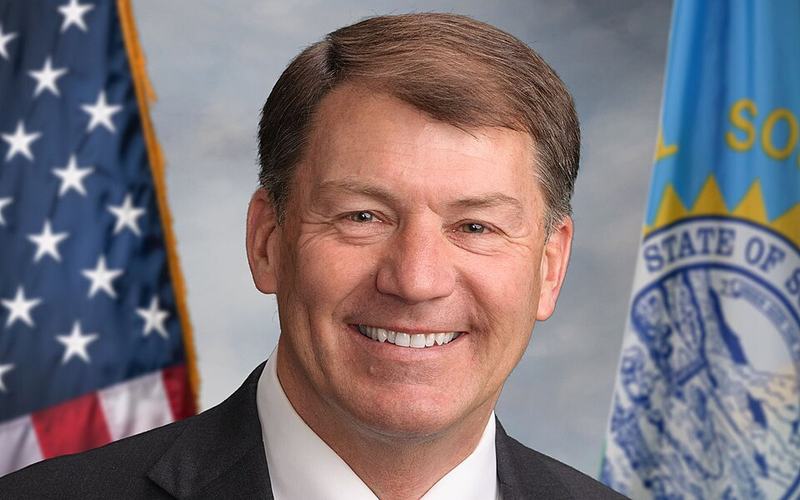
Republican Sen. Mike Rounds has defeated independent challenger Brian Bengs in South Dakota's U.S. Senate race, securing a third term and keeping the seat in Republican hands. Rounds' victory follows a campaign in which Bengs attempted to capitalize on dissatisfaction with Washington politics and appeal to voters looking beyond the traditional Republican and Democratic parties.
Rounds, a former two-term South Dakota governor, was first elected to the Senate in 2014 after Democratic Sen. Tim Johnson chose not to seek reelection. He won a second term in 2020, defeating Democrat Dan Ahlers by more than 30 percentage points. Before entering the Senate, Rounds served as governor from 2003 through 2011 and previously represented District 24 in the South Dakota Senate.
During the campaign, Rounds emphasized his experience, conservative record, and ability to represent South Dakota's interests in Washington. He highlighted his work on national security, agriculture, energy development and economic policy while maintaining his support for President Donald Trump's broader agenda. Rounds also pointed to his previous service in state government as evidence that he understands the priorities of South Dakota residents.
Bengs, a retired Air Force lieutenant colonel and former educator, ran as an independent after previously challenging Republican Sen. John Thune as the Democratic nominee in 2022. His second Senate campaign focused on government accountability, the influence of wealthy donors, political polarization, and the rising cost of living. Bengs argued that South Dakotans deserved an independent senator who would prioritize the state over party leadership.
One of Bengs' central arguments was that the nation's political system had become too dependent on wealthy donors and special interests. He criticized the influence of corporate money in federal elections and attempted to distinguish himself from both major parties. His campaign also attracted support from national independent political organizations seeking to demonstrate that candidates outside the Republican and Democratic parties could compete in Senate elections.
Despite the challenge, Rounds maintained a significant financial advantage. Federal Election Commission filings through October 14 showed Rounds had raised approximately $5.1 million, compared with about $1.9 million for Bengs. Outside groups also spent millions of dollars attempting to influence the contest, bringing the overall cost of the race close to $10 million.
Polling showed Bengs had gained some traction, although Rounds maintained the advantage in most late-campaign surveys. An October 19-20 Emerson College poll conducted for KELO-TV showed Rounds leading Bengs 50% to 42% among 803 likely voters. A separate South Dakota News Watch and University of South Dakota survey conducted October 12-14 found Rounds ahead 56% to 37%. An earlier Concord Public Opinion Partners survey had shown Bengs narrowly leading, illustrating the differing assessments of the race.
The contest also featured an unusual ballot. Democrat Julian Beaudion initially advanced to the general election but withdrew, leaving Bengs as the principal challenger to Rounds. The absence of a Democratic nominee gave Bengs an opportunity to attract voters across party lines, but it also meant he had to build name recognition and a statewide political operation largely from scratch.
South Dakota remains one of the Republican Party's strongest states. Republicans substantially outnumber Democrats in voter registration, and the state has consistently supported Republican candidates in federal elections. Rounds' victory reinforces that political advantage and ensures continuity in South Dakota's Senate representation alongside Republican Sen. John Thune.
Rounds will begin his third Senate term in January 2027. His reelection preserves a Republican-held seat as both parties continue competing for control of the chamber. For Bengs, the defeat ends a second attempt to win a Senate seat, but his campaign demonstrated that independent candidates could attract significant financial support and national attention even in states with strong partisan loyalties.

Comments
No comments yet. Be the first to share your thoughts.